
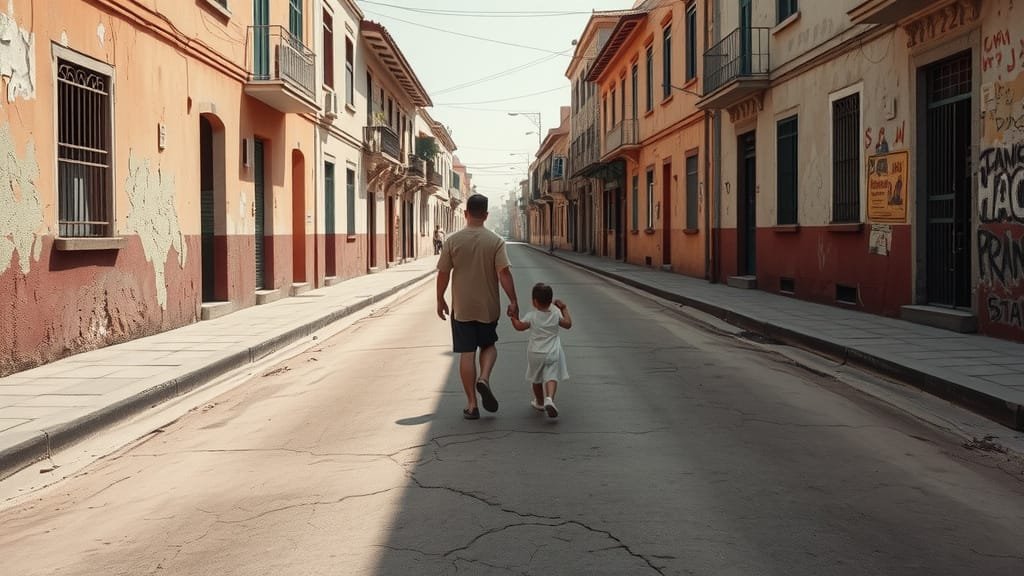
There are crises that explode into view… and then there are the ones that never quite end.
Venezuela belongs firmly in the second category.
Not a breaking story. Not a sudden collapse. Just a long, grinding humanitarian emergency that’s been slowly normalised by repetition.
When something drags on long enough, the world stops reacting. It stops asking why. It files it away under that’s just how it is there.
That’s when the real damage begins.
This didn’t happen overnight
Venezuela didn’t wake up one morning broken. It slid there… quietly, gradually, then all at once.
An economy dangerously dependent on oil. Institutions hollowed out long before the power cuts became visible. Loyalty promoted over competence. Corruption baked so deeply into the system it stopped being questioned by those who benefited from it.
By the time shelves were empty and hospitals were failing, the collapse was already well underway.
Under Nicolás Maduro, power shifted from governance to defence. Less about improving life, more about holding position. And when a system stops believing it can deliver progress, it falls back on control instead.
That isn’t ideology… it’s fear wearing authority’s clothes.
The daily reality no one broadcasts
From the outside, humanitarian crises are described in numbers. Inflation rates. Aid targets. Migration statistics.
Inside Venezuela, the metrics are more intimate.
Food exists… just not reliably.
Medicine exists… just not when you need it.
Work exists… but wages no longer mean survival.
So people adapt.
They ration meals. They trade possessions for time. They learn which pharmacy might have insulin this week. They walk instead of travel. They sell what little they own not to get ahead, but to stay afloat.
Survival becomes a skill. Then a routine. Then a way of life.
And when survival consumes everything, ambition shrinks. Planning fades. Outrage dulls. Even hope becomes conditional.
Why the suffering persists
Here’s the part that makes polite conversations uncomfortable…
Prolonged humanitarian crises often serve those in power.
Not because leaders enjoy suffering, but because scarcity exhausts resistance. When people are busy surviving, they have little energy left to organise or challenge authority. When leaving becomes the rational choice, dissent exports itself quietly.
Sanctions are imposed with moral intent, yet often land hardest on ordinary people. Elites adapt. Black markets flourish. Aid replaces governance. Accountability dissolves.
The system doesn’t need to work well.
It just needs to work enough.
The slow erosion no one measures
The deepest damage isn’t hunger or migration.
It’s expectation.
Children grow up assuming instability is normal. Parents stop imagining futures beyond the next few weeks. Education becomes transactional. Dreams start to feel indulgent.
When people no longer expect tomorrow to be better than today, systems rot without resistance.
That’s the true humanitarian crisis… not just lives disrupted, but futures quietly cancelled.
The international theatre
From the outside, Venezuela is treated like a chessboard.
Statements are issued. Positions taken. Sanctions adjusted. Alliances signalled. Everyone plays their role convincingly.
Meanwhile, ordinary Venezuelans live inside the consequences of decisions made far beyond their reach.
They are not ideological symbols.
They are not leverage.
They are not abstractions.
They are people negotiating daily life inside a system that no longer pretends to serve them.
Why this matters beyond Venezuela
Because Venezuela isn’t an outlier… it’s a warning.
It shows what happens when control replaces competence. When institutions are hollowed slowly rather than shattered publicly. When endurance becomes a substitute for accountability.
Collapse doesn’t always arrive with drama. Sometimes it arrives with fatigue.
And fatigue is contagious.
The inconvenient hope
Here’s the part that refuses to die, even in pieces like this.
Countries are not their governments. People are not their systems.
No structure can indefinitely demand sacrifice without offering belief in return. Eventually, even fear becomes expensive to maintain. Even loyalty runs out. Even endurance fractures.
Change rarely arrives in cinematic moments. More often, it seeps through cracks the system can no longer afford to seal.
Venezuela is not beyond repair.
But repair won’t come from outrage alone. Or sanctions alone. Or slogans alone.
It will come when survival no longer consumes everything…
When people can afford to imagine tomorrow again.
Until then, the least the rest of us can do is stop treating this as background noise.
Because humanitarian crises don’t end when suffering stops…
They end when people stop being ignored.
Author’s Note
I didn’t write this to take a political position or to rehearse arguments already shouting past each other.
I wrote it because prolonged suffering has a way of fading into the background… and once that happens, it becomes easier to ignore than to confront.
Venezuela isn’t a talking point. It’s millions of ordinary lives lived under extraordinary pressure, year after year, until endurance is mistaken for acceptance.
This piece is a reminder to myself as much as anyone else… to keep noticing, to keep questioning, and to resist the quiet normalisation of human cost.
Because when we stop paying attention, systems don’t improve.
They calcify.And people disappear into statistics.
Until Next Time

Discover more from Dominus Owen Markham
Subscribe to get the latest posts sent to your email.