
We’ve been absolutely gaslit by technology into believing that because we can ask for something instantly, we should receive it instantly.
You tap a button, the taxi arrives. You press play, the film starts. You send a message, the reply pops up (or causes anxiety when it doesn’t). We’ve become Pavlovian dogs, but instead of salivating at bells, we’re twitching at loading bars.
But here’s what nobody wants to hear: the meaningful stuff, the stuff that actually matters, doesn’t work that way. Never has, never will.
You want a fit body? That’ll be months of showing up when you don’t feel like it. A thriving business? Years of being overlooked and ignored. A skill worth having? Thousands of hours of being rubbish before you’re even mediocre. A proper relationship? Time, attention, and the willingness to still be there when it’s boring or hard.
The cruel irony is that technology has made us worse at the very thing that makes anything worthwhile: consistency. Because we’re so used to instant gratification in our pockets, we’ve lost the muscle memory for delayed gratification in our lives. We mistake speed for progress. We confuse convenience for accomplishment.
The Delusion of Instant Creativity
Let me talk about creativity specifically, because it exposes the lie most brutally.
Everyone’s walking around with a supercomputer in their pocket, AI that can write essays in seconds, design tools that make professional-looking graphics in minutes, apps that’ll “help you write your novel” with templates and prompts and productivity hacks. The barriers to entry have never been lower. The tools have never been better.
And yet… most people still don’t create anything worth remembering.
Why? Because the tools were never the problem.
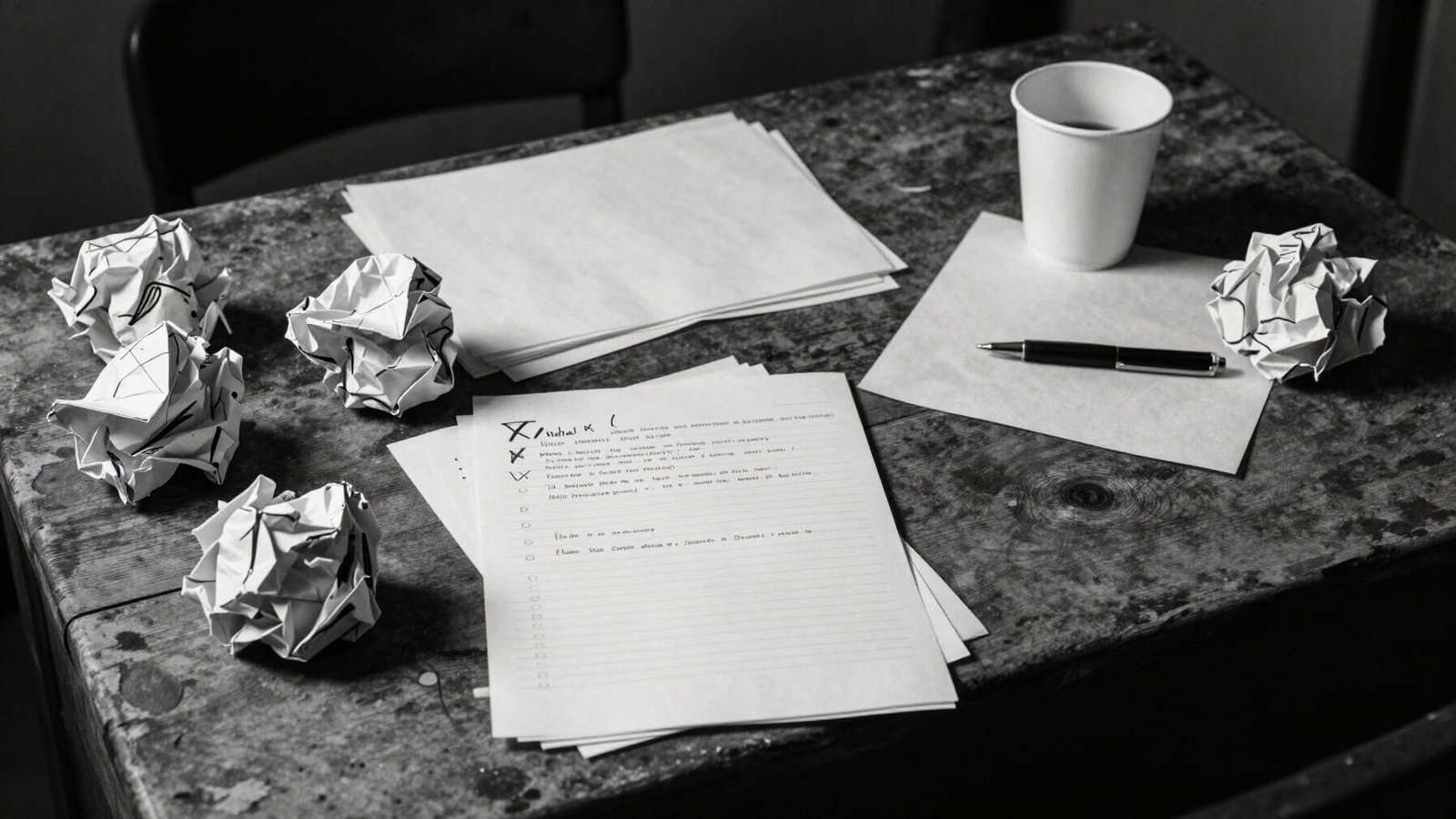
The problem is that creativity, real creativity, the kind that actually connects with people and means something, requires you to show up when the blank page is terrifying. When the first draft is embarrassing. When nobody’s reading. When you’ve posted three things in a row that got crickets. When the algorithm ignores you. When your mates don’t get it.
The technology has made it easier to start. It’s made it easier to distribute. But it hasn’t made it any easier to continue. That bit still requires the same ancient, boring, unglamorous thing it always has: doing it again tomorrow. And the day after. And the day after that.
What’s happened is we’ve conflated access to tools with possession of craft. Just because you can generate an image with AI doesn’t mean you understand composition, emotion, storytelling. Just because you can publish a blog post instantly doesn’t mean you know how to write something that’ll still matter in a year.
The real creative work, the bit that actually matters, happens in the gap between “I’ve got an idea” and “I’ve made something that doesn’t make me cringe”. And that gap doesn’t get shorter because you’ve got better software. If anything, it gets longer, because now you can see just how good other people are, instantly, all the time, which makes your own work feel even more inadequate.
The Performance of Consistency
Here’s what nobody wants to admit: the Instagram version of consistency, the one with the aesthetic bullet journal and the motivational quote overlaid on a sunset, that’s not real consistency. That’s performance of consistency. That’s consistency when it feels good, when it photographs well, when you can hashtag it.
Real consistency is grey.
It’s showing up on a Wednesday in February when your heating’s broken, and you’ve got a headache, and the thing you’re working on still isn’t clicking, and you do it anyway. Not because you’re inspired. Not because you’ve got some profound insight. But because it’s Wednesday, and Wednesday is when you do the thing.
The tech age has made us addicted to the feeling of progress. We want the dopamine hit. The notification. The like. The comment that says “this is amazing, keep going”. And when we don’t get it, we assume we’re doing it wrong. So we stop. We pivot. We try a different platform, a different format, a different approach.
We’re optimising for feedback instead of optimising for doing the work.
But the people who actually make something that lasts? They’ve usually spent years in the void. Posting to an audience of twelve. Writing things nobody reads. Making things nobody sees. And they kept going anyway, not because they’re more disciplined or more talented, but because they’d accepted that most of it would feel like nothing.
What the Productivity Gurus Won’t Tell You
That’s the bit the productivity gurus don’t tell you. They sell you systems and routines and morning rituals, as if the problem is that you haven’t organised your creativity properly. Buy this planner. Download this app. Follow this five-step framework. Wake up at 5am. Journal for twenty minutes. Meditate. Then create.
But you can’t hack your way past the fundamental requirement: you have to be willing to do mediocre work, repeatedly, until it’s not mediocre anymore.
And most of that work will happen when you feel absolutely nothing about it.
Your tenth blog post is better than your first. Your hundredth is better than your tenth. But we live in a world that only wants to see the highlight reel, so we never see the rubbish drafts, the failed experiments, the years of obscurity. We think people just “suddenly” got good, when really they just consistently showed up until good was inevitable.
The same technology that’s made information instant has accidentally convinced us that transformation should be instant too. But that’s a category error. Loading a webpage and building a life are not the same kind of task.
The Paradox We’re Living In
Here’s the paradox: in this slick techno age, the competitive advantage isn’t being faster or smarter or more connected. It’s being willing to show up, repeatedly, when nothing seems to be happening. It’s playing the long game while everyone else is refreshing their feeds looking for the shortcut.
Technology gives us endless ways to create and endless platforms to share on. But that abundance of choice often leads to paralysis or platform-hopping. The person who commits to one thing, one format, one voice, and just keeps going… they win. Not because they’re more talented, but because they’re still there when everyone else got bored and moved on.
Consistency isn’t sexy. It’s not a life hack. It won’t go viral. You can’t download it. You can’t automate it. You can’t ask AI to do it for you.
But it’s the only thing that’s ever actually worked, and all the apps in the world haven’t changed that.
The Bit the Apps Can’t Help With
So here’s the unglamorous truth, the bit nobody wants to hear but everyone needs to:
Consistency isn’t about motivation or inspiration or the perfect morning routine. It’s about doing it when you feel nothing. When it’s raining. When nobody cares. When you’re tired. When the tech fails.
The tech fails. The motivation disappears. The weather’s grim. Nobody’s watching. The algorithm ignores you. Your stats are flat. The comments section is empty. You don’t feel inspired. You don’t feel creative. You don’t feel anything.
And you still sit down and do it.
That’s consistency.
And whether you’re talking about creativity, relationships, health, business, or craft, it’s the same truth wearing different clothes. The meaningful work happens in the boring bits. The transformation happens in the gaps between the highlights. The person you want to become lives on the other side of a thousand unremarkable Wednesdays.
The apps can’t help with that. The tools can’t shortcut it. The AI can’t do it for you.
You just have to show up. Again. And again. And again.
Even when it feels like nothing.
Especially when it feels like nothing.
Because that’s when it counts the most.
Until Next Time


Discover more from Dominus Owen Markham
Subscribe to get the latest posts sent to your email.