
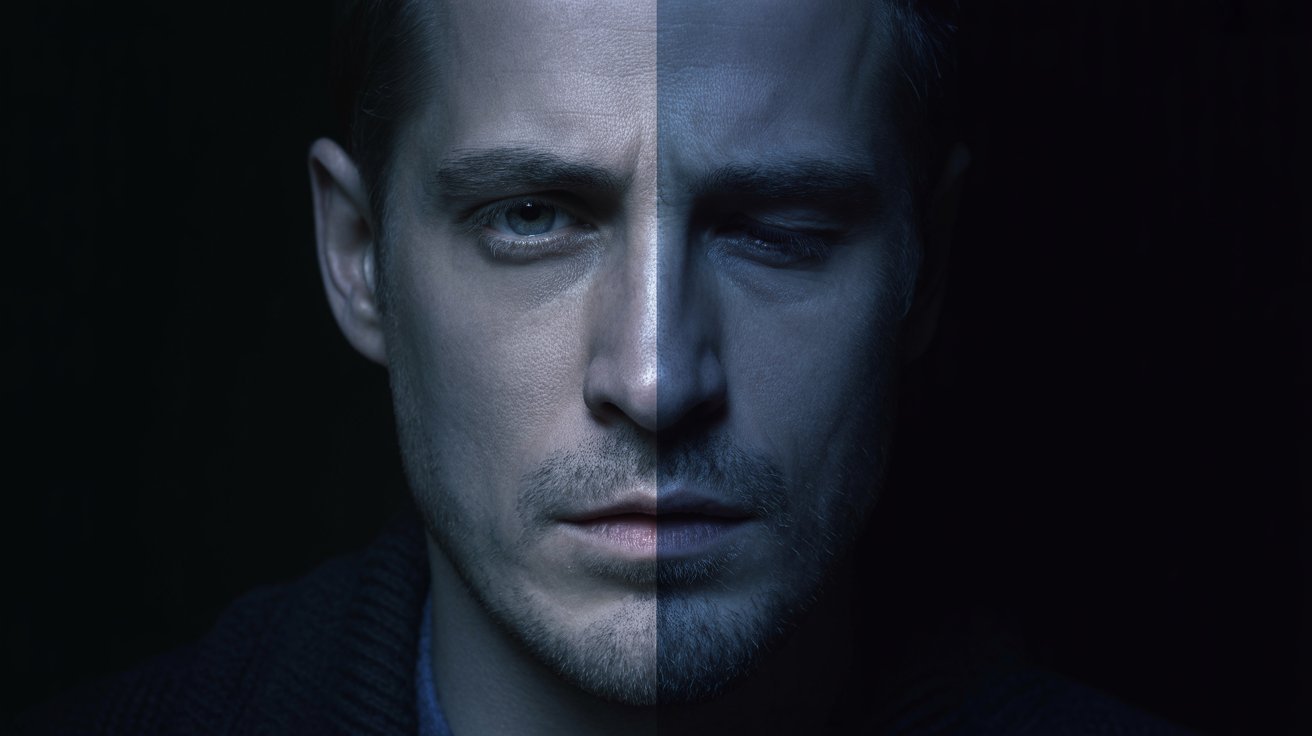
There’s a man sitting in the GP’s waiting room, and he’s doing that thing men do when they’re pretending everything is fine.
You know the one. Legs spread wide. Phone out, scrolling through nothing in particular. Face completely neutral, like he’s waiting for a bus rather than sitting in a doctor’s surgery at 9am on a Tuesday because something inside him has finally broken enough that he had to do something about it.
He’s been here twenty minutes. His appointment was supposed to be ten minutes ago, but the GP is running late because the GP is always running late, and now he’s got time to think about leaving. About just standing up, walking out, going to work, and pretending this never happened. Because that’s what he did the last three times he booked an appointment. Cancelled. Rescheduled. Cancelled again. Told himself it wasn’t that bad. Told himself he’d be fine.
But he’s not fine. He hasn’t been fine for months. Maybe years. And the thing is, he can’t actually articulate what “not fine” means because he doesn’t have the words for it. Just this… heaviness. This constant static in his head. This feeling that he’s living his life from behind glass, watching everything happen but not really being in it.
When his name gets called, he’ll stand up. He’ll walk into that consulting room. And when the GP asks “what can I do for you today?”, there’s a very real chance he’ll say “actually, I think I’m alright” and leave.
This is the problem with men.
Not all men, obviously. Not every man. But enough men that it’s become a pattern. A crisis, even. And the fucked up thing is, we all sort of know it’s happening, but we’ve collectively decided that talking about it is somehow embarrassing. Weak. Not the done thing.
The Curriculum No One Signed Up For
Here’s the thing about masculinity… it’s not genetic. It’s taught.
Not in classrooms or explicit lectures, but in a thousand tiny moments that add up to a comprehensive education in what you’re allowed to feel and, more importantly, what you’re absolutely not allowed to feel.
It starts early. Playgrounds are basically laboratories for this stuff. The first time a boy cries and another boy calls him a “pussy” or a “girl” or “gay” (as if any of those things are insults), something gets noted. Filed away. Crying equals weakness. Weakness equals target. Don’t cry.
Then there’s the dad who goes silent when he’s upset instead of saying “I’m sad” or “I’m scared” or “I don’t know what to do.” The kid watches this. Learns that men don’t say things, they just… absorb them. Internalise them. Get on with it.
There’s the PE teacher who tells you to “man up” when you’re winded. The uncle who laughs when you admit you’re nervous about something. The mate who takes the piss the absolute second you show vulnerability because that’s what mates do, isn’t it? Banter. Keep it light. Don’t get serious.
And it works. God, does it work. By the time most men hit adulthood, they’ve been so thoroughly trained in emotional suppression that it’s not even conscious anymore. It’s just… default. The operating system. Feelings happen to other people. Real men just crack on.
Except feelings don’t actually go anywhere just because you ignore them. They don’t evaporate. They don’t fuck off to some other dimension. They just… transform.
Lost in Translation
Here’s what happens when you spend decades not practising emotional literacy: you lose the ability to identify what you’re actually feeling.
It all becomes this undifferentiated sludge of “bad” or “fine” or “bit stressed.” Sadness becomes irritation. Fear becomes aggression. Loneliness becomes workaholism. Grief becomes anger. Anxiety becomes… well, actually, anxiety often just gets labelled as “being a bit wound up” and ignored until it manifests as a panic attack in Tesco’s car park at 3pm on a Wednesday.
And because men don’t have the vocabulary for nuance, everything gets funnelled into the one emotion that’s socially acceptable: anger.
Angry is fine. Angry is masculine. Angry gets shit done. You can be angry at work, angry at traffic, angry at the ref, angry at politicians. Anger is practically encouraged. It’s all the other stuff… the sadness, the fear, the vulnerability, the “I don’t know if I’m okay”… that’s verboten.
So men walk around feeling things they can’t name, which means they can’t process them, which means they can’t communicate them, which means they end up at the GP at 9am on a Tuesday feeling like they’re losing their minds but unable to explain why.
“I just feel a bit… off.”
“Tired, I suppose.”
“Not sleeping great.”
“Yeah, work’s been busy.”
It’s like trying to describe a film you’ve never seen in a language you don’t speak. You know something is wrong, but you don’t have the tools to articulate what or why or how to fix it.
What Happens When Emotions Have Nowhere to Go
The body keeps score. That’s not a metaphor, it’s neuroscience. When you suppress emotions chronically, they don’t just disappear… they get stored. In your shoulders, your jaw, your gut, your heart.
Ever wonder why men have higher rates of heart disease? Why stress-related illness hits men harder? Why the life expectancy gap exists? It’s not just genetics or lifestyle. It’s decades of swallowing feelings, of carrying weight you were never supposed to admit was heavy.
And then there’s the other stuff. The coping mechanisms that aren’t coping mechanisms at all, just slow-motion self-destruction dressed up as normal male behaviour.
Drinking too much because “that’s what you do after work.” Working 70-hour weeks because “that’s what provides.” Shutting down emotionally in relationships because “I’m just not good at talking about feelings.” Getting into fights because the alternative is crying and crying is unthinkable.
Addiction rates. Suicide rates. Violent crime rates. Homelessness rates. Every single one skews male, and every single one has roots in this same problem: men don’t know how to process or express what they’re feeling, so it comes out sideways. Destructively. Fatally.
The three biggest killers of men under 50 in the UK are accidents, suicide, and heart disease. Strip away the clinical language and what you’ve got is: “did something reckless,” “couldn’t see another way out,” and “literally internalised stress until it killed them.”
That’s not a gender doing fine.
The Loneliest Room in the House
This plays out most obviously in relationships.
There’s a specific kind of loneliness that comes from being in a partnership with someone who cannot or will not let you in. Who responds to “what’s wrong?” with “nothing” even when everything is clearly, obviously wrong. Who treats emotional intimacy like an interrogation rather than connection.
And here’s the cruel bit: most men doing this don’t want to shut people out. They’re not trying to be difficult. They genuinely don’t know how to do it differently. Because emotional fluency is a skill, and like any skill, if you don’t practise it, you lose it. Or never develop it in the first place.
So you end up with these relationships where one person is emotionally articulate, doing all the heavy lifting, trying to decode silence and mood swings and withdrawal, while the other person is drowning but can’t say “I’m drowning” because they literally don’t have access to that sentence.
“Why won’t you talk to me?”
“I don’t know what you want me to say.”
“Anything. Just… talk.”
“I’m fine.”
And the thing is, he probably believes he’s fine. Because “fine” is the only setting he knows. Fine means functioning. Going to work. Paying bills. Not actively crying. That’s fine, isn’t it?
Meanwhile, she’s watching someone she loves disappear behind a wall he’s been building since he was seven years old, and she can’t get through, and he can’t ask for help getting out, and eventually something breaks. Usually the relationship.
The divorce statistics don’t lie. The separation is often initiated by women, not because they’re flighty or commitment-phobic, but because you can only live with someone’s emotional absence for so long before it becomes unbearable.
The Generational Shift (Maybe)
There’s this narrative now that younger men are different. That Gen Z lads are out here going to therapy, talking about their feelings, using words like “boundaries” and “emotional labour” and “processing.”
And maybe that’s true. Maybe it is shifting. You certainly see more young men talking about mental health. More awareness. More vocabulary. More willingness to admit that therapy isn’t just for “crazy people.”
But there’s talking about mental health, and then there’s actually feeling your feelings. And I’m not convinced the gap has closed as much as we’d like to think.
Because performative awareness is still performance. You can know all the therapy-speak in the world and still be fundamentally disconnected from your own emotional reality. You can post about men’s mental health on social media and still never actually ask for help when you need it.
The question isn’t “do young men know feelings exist?” It’s “can they actually access and express their own feelings when it matters?”
And the honest answer is: some can. Many can’t. The work is generational, and we’re still in the early days.
There Is No Neat Solution
I’d love to wrap this up with some tidy little conclusion about how we fix this. Five steps to emotional literacy. A roadmap to healthier masculinity. Some inspirational shite about vulnerability being strength.
But the truth is, this problem is so deeply embedded in how we raise boys, structure society, and define manhood that there’s no quick fix. No magic bullet. No single intervention that suddenly makes men fluent in their own inner lives.
What helps? Therapy, obviously. Actual proper therapy with someone trained, not just “talking to a mate down the pub.” Friendships where honesty is allowed and encouraged. Partners who create space for vulnerability without punishment. Media and culture that models emotional complexity in men without making it a joke or a plot point.
And practice. So much practice. Learning to identify feelings. Name them. Sit with them. Express them. Ask for help. Say “I’m not okay” out loud and mean it.
But mostly, it requires acknowledging that the current model is broken. That stoicism and emotional suppression and “just getting on with it” aren’t making men stronger or more capable or more masculine… they’re killing us.
The man in the GP’s waiting room? He eventually gets called in. He sits down. The GP asks what’s wrong.
And there’s this moment… this tiny, precarious moment… where he could say it. Could actually admit that he’s been struggling. That he thinks he might be depressed. That he doesn’t know what to do.
Or he could say “actually, think I’m alright” and leave.
What he does next determines everything.
And that’s the problem with men. Not that we’re broken or defective or inherently fucked. But that we’ve been taught for so long that our feelings don’t matter, that asking for help is weakness, that being a man means suffering in silence…
…that when the moment comes to finally speak, we’ve forgotten how.
Until Next Time

Discover more from Dominus Owen Markham
Subscribe to get the latest posts sent to your email.