
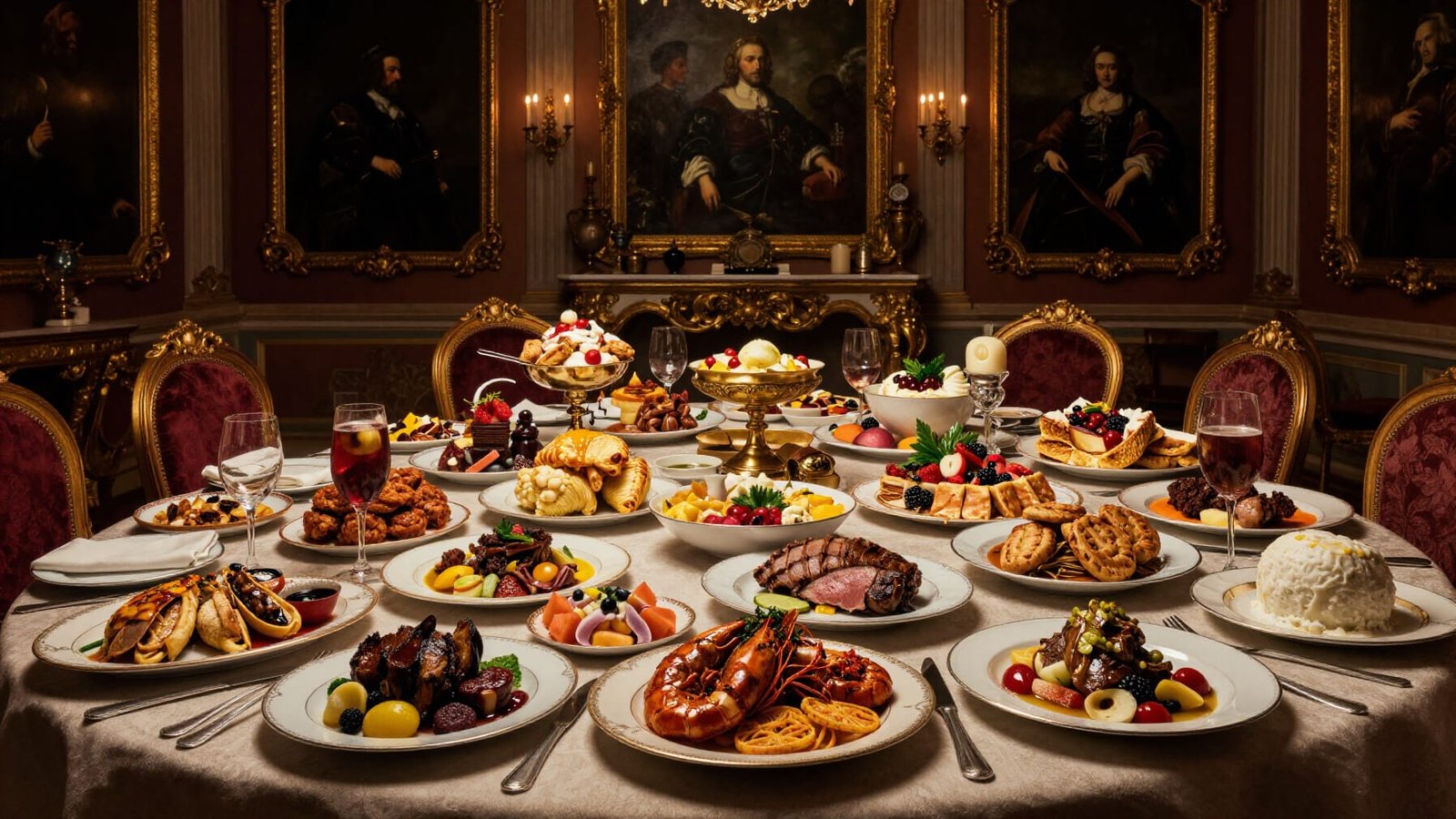
On Christmas, Capitalism, and the Violence of Plenty
Every December, we perform a ritual so absurd that if you described it to someone from another planet, they’d assume you were taking the piss.
We spend weeks buying things nobody needs, wrapping them in paper we’ll immediately throw away, eating until we feel ill, and pretending this spectacle of excess is about love, family, and the birth of a carpenter’s son who famously had strong opinions about rich people and camels and needles.
And while we’re doing all this… people are starving.
Not somewhere abstract. Not in a faraway land we can’t quite picture. Here. In the UK and Europe. In the streets you’ve walked down. In towns where the Christmas lights go up in November and the food banks run out of donations by mid-December.
The cognitive dissonance required to hold both realities in your head at once is staggering. But we manage it every year, don’t we? We’ve got very good at it.
The Great Distraction
Here’s what late-stage capitalism has perfected: the art of making you feel like a failure if you’re not participating in its fever dream of consumption, while simultaneously making you feel virtuous for doing so.
“It’s for the children.”
“It’s tradition.”
“It’s the most wonderful time of the year.”
Wonderful for whom, exactly?
Wonderful for Amazon, whose warehouse workers are pissing in bottles to meet delivery quotas for your last-minute panic purchases. Wonderful for the shareholders of multinational corporations who’ve spent decades turning a religious holiday into a commercial obligation. Wonderful for the advertising industry, which has convinced us that love can be measured in pounds sterling and that if you don’t spend enough, you don’t care enough.
It’s not wonderful for the single parent choosing between heating and feeding their kids. It’s not wonderful for the elderly person eating alone on Christmas Day because they can’t afford the bus fare to see family. It’s not wonderful for the homeless person sleeping rough while we complain about the queues in John Lewis.
But we don’t talk about that, do we? Not really. Not in a way that threatens the machinery.
The Machinery Runs on Silence
The system depends on our collective amnesia. It needs us to forget, every single year, that this isn’t normal. That the grotesque inequality baked into our society isn’t a fact of nature but a set of choices made by people with names and addresses and offshore accounts.
It needs us to believe that poverty is an individual failing rather than a structural feature. That if people are hungry, it’s because they’re lazy or made bad choices or didn’t work hard enough. Never mind that plenty of people working three jobs still can’t afford to eat properly. Never mind that the wealth gap is wider than it’s been in living memory. Never mind that we live in a country where food banks exist in the same postcodes as million-pound houses.
The machinery hums along because we’ve been trained not to ask uncomfortable questions.
Why do we accept that billionaires can exist while children go hungry?
Why is it normal for corporations to pay poverty wages while posting record profits?
Why have we outsourced our compassion to charity… as if feeding people shouldn’t be a basic function of a civilised society?
These aren’t rhetorical questions. They’re the questions we should be screaming in the streets. But instead, we’re queuing for a Starbucks gingerbread latte and scrolling through Christmas gift guides.
The Performance of Generosity
And then there’s the charity angle. The annual performance of giving just enough to feel good about ourselves, without actually threatening the system that creates the need for charity in the first place.
We buy a tin of beans for the food bank and feel like we’ve done our bit. We donate a fiver to Children in Need and watch celebrities dance in sparkles. We share a post about homelessness on social media and think we’ve raised awareness.
Meanwhile, the people who could actually solve these problems… the politicians, the CEOs, the landlords, the tax-dodging elite… they’re having champagne at their Christmas parties and patting themselves on the back for their “charitable contributions” that amount to a rounding error in their annual bonuses.
Don’t misunderstand me. Food banks matter. Donations matter. Individual acts of kindness matter. But they’re sticking plasters on a gunshot wound. They’re proof that the system is broken, not evidence that it’s working.
If we need charity to prevent mass starvation in one of the wealthiest countries on Earth, we’ve already lost the plot.
What We’re Really Celebrating
So what are we actually celebrating at Christmas?
If we’re honest… and I mean really honest… we’re celebrating our ability to ignore the violence of inequality for a few weeks. We’re celebrating the fleeting comfort of pretending everything’s fine. We’re celebrating the myth that we’ve earned our comfort, that we deserve our plenty, that the people suffering somehow deserve less.
We’ve turned Christmas into a celebration of capitalism’s greatest magic trick: convincing us that this is just how things are. That there’s no alternative. That questioning the system makes you a killjoy, a Scrooge, someone who doesn’t understand the “spirit of Christmas.”
But the real spirit of Christmas… if we’re going back to the story we claim to be honouring… was about a radical redistribution of power. It was about the last being first and the first being last. It was about overturning tables and challenging authority and caring for the marginalised.
Somewhere along the way, we turned that into Black Friday sales and John Lewis adverts and arguments about whether Die Hard is a Christmas film.
Sitting With It
I’m not offering you solutions here. I’m not going to wrap this up with a neat little list of things you can do to make yourself feel better.
Because the point isn’t to feel better. The point is to feel the discomfort. To sit with the grotesque contradiction of our festive gluttony while people starve. To recognise that our comfort is built on someone else’s suffering. To stop pretending that this is normal, or acceptable, or anything other than a damning indictment of the society we’ve built.
Maybe that discomfort is the only honest response.
Maybe it’s the only thing that might, eventually, make us angry enough to demand something different.
Or maybe we’ll just keep doing this every year… stuffing our faces, buying our mountains of plastic tat, posting our Instagram-perfect Christmas mornings, and pretending we don’t hear the sound of people going hungry in the background.
After all, it’s tradition.
Until Next Time

Discover more from Dominus Owen Markham
Subscribe to get the latest posts sent to your email.