
Why Being the Odd One Out Might Be Your Greatest Asset
I’ve been called eccentric more times than I can count. Sometimes it’s said with affection, other times with a barely concealed eye-roll. Either way, I’ve stopped apologising for it.
Here’s what I’ve learnt: eccentricity isn’t a character flaw requiring correction. It’s a compass pointing towards authenticity in a world that rewards conformity with mediocrity.
The Lone Soldier Advantage
There’s a peculiar freedom that comes with being the person who doesn’t quite fit. When you’re not desperately trying to secure your place in the crowd, you stop moving in formation. You can pivot. You can question. You can stand completely still whilst everyone else marches off a cliff and think, “Actually, no.”
I’ve built my life and work around this principle…sometimes consciously, often by accident. Off-grid living. Cultural commentary that refuses to stay in neat ideological boxes. A writing voice that doesn’t sound like it emerged from a content marketing template. None of this would exist if I’d spent my energy trying to blend in.
The lone soldier isn’t lonely. That’s the misconception. The lone soldier is selective. There’s a difference between isolation and discernment, and eccentricity teaches you that difference fast.
Emotional Honesty in a Performance Culture
One of the stranger aspects of modern life is how we’ve turned authenticity into a brand strategy. Everyone claims to be “keeping it real” whilst performing a carefully curated version of vulnerability designed to maximise engagement.
Eccentricity…real eccentricity…doesn’t perform well in this environment. It’s too messy. Too inconsistent. It doesn’t stay on message.
And that’s precisely why it matters.
When I write autobiographically, when I share aspects of my life and thinking, it’s never the whole picture. I’m not streaming my existence for public consumption. But what I do share comes from a place of genuine emotional honesty, not strategic relatability. The private remains private. The public gets what I choose to make public. And somehow, that boundary creates more trust than the endless oversharing that passes for authenticity online.
People can sense when you’re saying something because you believe it, versus saying something because it polls well. Eccentricity gives you permission to simply say what you actually think…a radical act in itself.
The Freedom to Focus on What Actually Matters
Here’s what happens when you stop worrying about fitting in: you free up an enormous amount of mental bandwidth to focus on things that actually matter.
Major world issues. Freedom of speech. Lifestyle autonomy. These aren’t abstract concerns for me…they’re the foundations of how I’ve chosen to live. And I can engage with them fully precisely because I’m not hedging my positions to maintain social acceptability.
Eccentricity allows for intellectual honesty. You can follow an idea wherever it leads without constantly checking whether you’re still in the approved lane. You can hold uncomfortable positions. You can change your mind publicly without it being a crisis of brand identity.
The mainstream conversation around the most important issues is suffocating in its caution. Everyone’s terrified of saying the wrong thing, of being misunderstood, of losing followers or opportunities. So we get endless streams of tepid, safe opinions that offend no one and inspire even fewer.
The eccentric doesn’t have that problem. There’s nothing to protect. The reputation is already “odd,” so you might as well be genuinely odd rather than performing safe conventionality.
The Economic Reality of Standing Out
Let’s be practical for a moment. In a marketplace drowning in sameness, difference sells.
Not always immediately. Not always predictably. But eventually, consistently.
People are bored. They’re saturated with content that sounds like it was written by the same algorithm in different fonts. When they encounter someone who sounds like an actual human with actual thoughts, it registers.
My work…the newsletters, the essays, the ebooks, the coaching…none of it would be viable if it sounded like everyone else. The eccentricity isn’t a barrier to success; it’s the entire foundation of it. People come precisely because it doesn’t sound like the usual noise.
This isn’t a strategy. It’s a consequence of refusing to pretend to be someone I’m not. But the economic reality is undeniable: in attention economics, being genuinely different is valuable.
The Cultural Necessity of Dissent
We’re living through a strange cultural moment where dissent is simultaneously celebrated and punished. We’re told to “be yourself” and “speak your truth” right up until the moment that truth makes someone uncomfortable, at which point you’re told to be quiet and play along.
Eccentricity is a cultural immune system. It’s the quality that allows a society to test new ideas, challenge existing ones, and avoid the stagnation that comes from everyone thinking and speaking in unison.
Every significant cultural shift began with people who were willing to be seen as eccentric, strange, or out of step. The abolitionists were eccentric. The suffragettes were eccentric. The civil rights activists were eccentric. Every person who refused to accept “this is just how things are” was considered odd by the standards of their time.
I’m not comparing my off-grid lifestyle or cultural commentary to these movements. But the principle holds: progress requires people willing to stand apart and say uncomfortable things.
And right now, when freedom of speech and thought are under pressure from multiple directions…from government censorship, from corporate moderation, from social punishment…eccentricity matters more than ever.

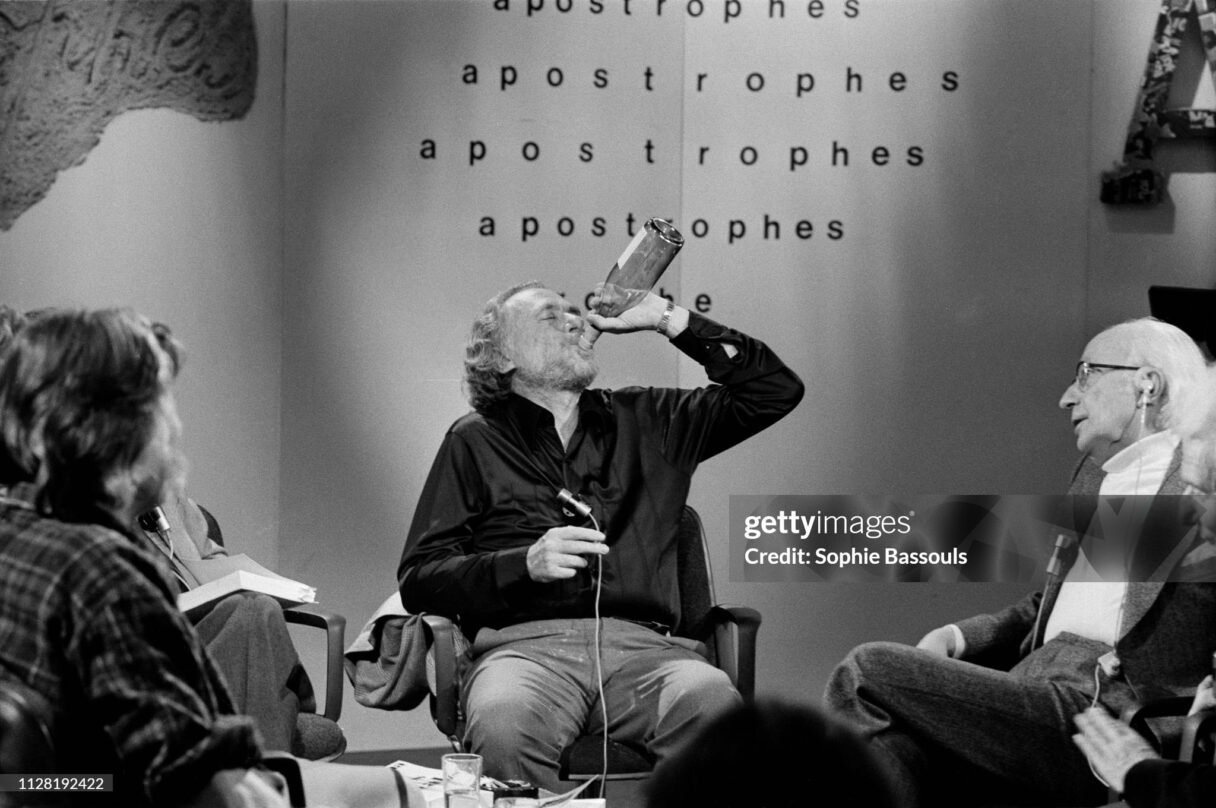
“The problem with the world is that the intelligent people are full of doubts, while the stupid ones are full of confidence.” – Charles Bukowski
The Private/Public Balance
One thing that seems to confuse people: I’m emotionally honest and personally reserved. These aren’t contradictions.
You can share your thinking without livestreaming your existence. You can be vulnerable about what matters without turning your entire life into content. You can maintain boundaries whilst still connecting deeply with people.
The eccentric understands this instinctively. We’re not performing for the crowd, so we don’t need to constantly feed the content machine. We share what serves the conversation, the idea, the connection. Everything else remains ours.
This selective exposure isn’t hiding. It’s sovereignty. It’s maintaining the space necessary to think clearly, to live authentically, to be something other than a public figure.
The Tireless Dedication Paradox
Here’s something odd about being eccentric: people assume you’re lazy or undisciplined because you don’t follow conventional paths. The opposite is usually true.
Building a life outside the mainstream requires relentless effort. Off-grid living isn’t a holiday. It’s daily problem-solving, maintenance, planning, and physical work. Creating content that doesn’t follow templates means doing the thinking yourself every single time. Running a business built on authenticity means you can’t phone it in—people will notice immediately.
Eccentricity isn’t the easy path. It’s often the harder one. But it’s harder in ways that feel aligned rather than soul-destroying.
I’d rather exhaust myself building something genuine than coast through a conventional existence that requires I pretend to be someone else.
Why This Matters Now
We’re at a cultural crossroads. One path leads towards increasing conformity, where algorithms and social pressure push everyone towards the same opinions, the same aesthetics, the same lives. The other path preserves space for genuine difference, for dissent, for the eccentric and the odd.
Which world do you want to live in?
Because here’s the truth: eccentricity isn’t just a personal preference. It’s a cultural necessity. It’s how new ideas emerge. It’s how stagnant thinking gets challenged. It’s how we avoid the slow suffocation of enforced sameness.
Every time someone chooses to be genuinely themselves…odd, unconventional, out of step…they create a little more space for others to do the same. They demonstrate that it’s possible to build a life, a career, a voice that doesn’t require constant compromise with mediocrity.
The Invitation
You don’t have to move off-grid or become a writer or dedicate yourself to cultural commentary. Eccentricity takes infinite forms.
But you might consider where you’re conforming not because you genuinely agree but because it’s easier. Where you’re staying quiet, not because you have nothing to say but because saying it might mark you as different. Where you’re following the crowd not because they’re going somewhere you want to be but because walking alone feels uncomfortable.
That discomfort? That’s where the interesting life begins.
The eccentric isn’t waiting for permission to be different. The world rarely grants that permission. The eccentric simply decides that being themselves…odd, unconventional, occasionally difficult…is more valuable than any approval that comes from pretending to be someone else.
I’ve built my entire life and work around this principle. Some days it’s harder than others. Some days I wonder what life would be like if I’d taken a more conventional path.
But then I remember: conventional paths lead to conventional destinations. And I’ve never been interested in ending up where everyone else does.
The eccentricity advantage isn’t about being different for its own sake. It’s about being authentically yourself and discovering that the qualities that make you odd are precisely the qualities that make you valuable.
Stand out. Be selective. Speak honestly. Focus on what matters. Maintain your sovereignty.
And if they call you eccentric? Take it as confirmation that you’re doing something right.
Until Next Time

Recommended Read:

Discover more from Dominus Owen Markham
Subscribe to get the latest posts sent to your email.