
The Coach Who Told Me Nobody Needs a Coach

EDITOR’S NOTE: I recently took a stick to the coaching industry. Then an old RAF friend in Australia answered every awkward question I could throw at him, starting with the admission that nobody actually needs a coach.
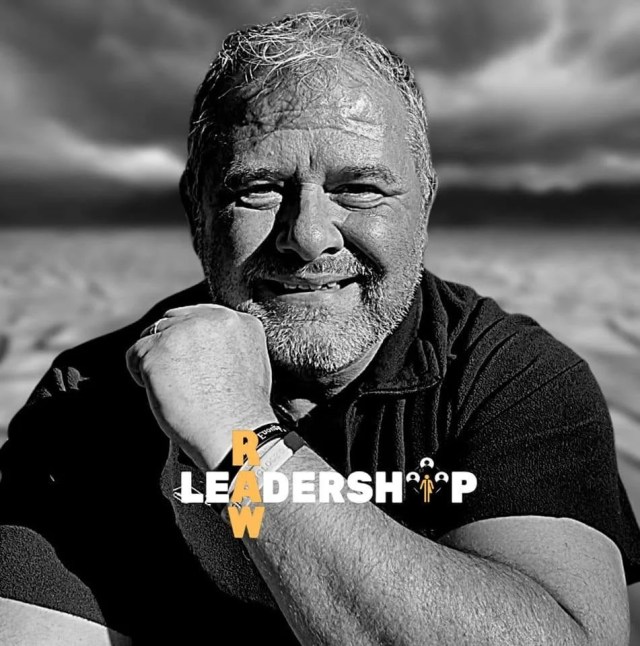
The recording arrived while I was asleep, which is the natural order of things when one of you lives in a cave in rural Spain and the other lives on the far side of the planet, in a country where summer is just turning up as our winter starts clearing its throat. Steve had done what Steve does. Rather than wrestle with a document, he’d sat himself in front of Zoom, propped my questions up in front of him and worked through every one of them in a single sitting, forty-odd minutes, unscripted, no retakes, finishing with a cheerful warning that it “could be war and peace for you.” It very nearly was. I’ve read the transcript three times now, and I’m writing this partly to work out why it got under my skin more than I expected it to.
A little while ago I published “The Need, Sold Separately”, a piece that took a fairly large stick to the coaching, guru and mentoring industry and its favourite trick of selling you an absence and then renting you the cure. I stand by every word of it. But writing only one side of a story is how you end up with exactly the kind of flattened certainty I spend most of my time complaining about, so I asked a friend who does this for a living whether he’d let me put the awkward questions to him directly. He said yes. Of course he said yes. You’ll understand why shortly.
The hand that always went up first
Steve Barker and I share the RAF, though from different ends of it. He served twenty-six years, with postings in Cyprus, Germany, Gibraltar, Italy, the Falklands twice and “in and out the desert a few times.” I was RAF Police, which means that when a man tells me he spent his second overseas tour in Cyprus “having a wild time”, some long-retired part of my brain still reaches for a notebook. By his own admission, he arrived at his first unit at seventeen, immature and prone to what he politely calls scrapes. His sergeant, a man called Jim Hayes, never bawled him out for any of it. He simply told Steve what he’d done wrong and what he expected instead, and in Steve’s words, “played Disappointed Dad very, very well,” which anyone who has ever been on the receiving end of that particular performance will know is far worse than shouting.
Jim’s remedy was simple and faintly punitive. Volunteer for everything. Extra parades, guard duties, extra shifts, whatever came up, Steve’s hand was to be first in the air, “otherwise you’re in trouble.” Being, as he puts it, a good airman who did as he was told, Steve obeyed, and then kept on obeying long after Jim had stopped checking. Years later he bumped into his old sergeant and asked, half joking, when he was ever going to get his reward for all this volunteering. Jim told him it would come in a strange and mysterious way, and that he wouldn’t even realise when it did.
It came when Steve was a drill instructor at RAF Halton, and volunteers were sought for Exercise Long Look, the exchange posting to Australia. It came down to Steve and another man called Paul, whom Steve describes as taller, leaner, fitter and a model recruiting poster of an airman, while Steve saw himself as “short, fat, and, you know, bit of a live wire still.” When he asked his bosses why on earth they’d picked him, the answer was that his hand was always first up, “whether it’s a good duty or a shit duty,” and this was the payback. He went in 2012, came home talking about Australia so relentlessly that somebody finally told him to go and live there, and in 2013 he did exactly that, walking away with a dozen or more years of career still ahead of him and a private deal with himself to give it three years.
Jim Hayes died in Cyprus about a month ago. His widow asked Steve to put some words together for the eulogy, and what he wrote was that Jim’s wisdom lives on through him and through everyone he passes it on to. There was a second mentor too, Sam Stephenson, Steve’s flight sergeant in Cyprus, who used an annual appraisal to tell the young party animal in front of him that if he wanted a career he needed to step up, and that he’d help if Steve decided he was serious. Steve decided, and was promoted within two years. What strikes me about both men is that neither of them ever called it mentoring. There was no programme, no discovery call, no tiered package. It was free, unbranded, and delivered by men with a bit more rank who simply decided a lad was worth the bother. That, it occurs to me, is precisely the thing the industry I went after is trying to sell back to us with a logo on it… and Steve, to his considerable credit, knows it, because he still hands Jim’s and Sam’s lessons on to his own clients by name.
A name said to a bathroom mirror
Australia did not roll out a red carpet. Steve’s RAF trade had been ICT, and his qualifications weren’t recognised, so the route back into his own field was four years of college followed by four years of experience, which would have landed him at the start of a new career at fifty-three. He declined that and bounced around instead, volunteering as a mentor at a juvenile justice centre, then working as a youth worker with children who’d been removed from their homes for their own safety. People kept telling him he should be a coach, so eventually he rang the Coaching Institute in Melbourne, largely because they promised to teach him how to run a business, a subject he knew precisely nothing about, having gone from the Air Force at sixteen straight onto a plane.
The woman on the phone listened to his story, told him he’d make a brilliant coach, told him the only thing standing in his way was that he didn’t think he was good enough, and then hung up on him. Later that day he was washing his hands in the bathroom, alone in the house, and found himself arguing with the mirror. You’ve been an adult instructor, he told his reflection. You’ve written training. You were a drill sergeant for five years. You’re enough, you’re enough. And then, in the moment that gave his business its name, he snapped at himself: “Will somebody stop saying YOU are enough, and will somebody please tell me that I am enough?” He rang the institute straight back. She asked whether the name was registered. He had no idea how you’d even check. She told him that was exactly why he needed them, and that if he didn’t register it, she’d steal it.
I asked him why he’d chosen a name that runs so squarely against the grain of the industry, and he didn’t dodge it. Most of the coaching world, he agreed, works by agitating the pain point that people aren’t good enough, “and that’s how they get their business.” I’ll admit that “I Am Enough” struck me as a bit of a greeting card when I first heard it. Then I found out where it came from, and it turns out it wasn’t a branding workshop at all but a middle-aged ex-drill sergeant, a very long way from home, having a row with his own face in a bathroom mirror. That’s harder to sneer at, and I’ve tried.

The question I most wanted answered was the blunt one. Do people actually need a coach, or have they just been sold the idea that they do? His answer, word for word, was “No, people don’t need a coach.” It’s not often a man tells you his entire profession is optional, so I let that sit for a moment before he got to the rest of it, which is that if you want to be successful at something specific, it helps to have someone in your corner who’ll hold you to account without being emotionally tangled up in your life. That, he says, is the difference between a coach and a friend, and it’s why he won’t coach friends, family or partners. He then reached for the Olympic analogy, pointing out that you won’t find a gold medallist without a coach, and here I’ll push back a little, because Olympians are chasing a measurable finish line and most of us are simply trying to get through a Tuesday. But his narrower point survives my quibble. A coach, on his account, is for someone pursuing something particular who wants to be kept honest about it, not for everyone who feels vaguely unfinished at three in the morning.
What convinced me more than the theory was the list of people he’s turned away. He meets everyone before offering anything, to find out whether they get on, whether they’re aligned, and whether he can genuinely help. He’s given free guidance to people who didn’t need a programme at all, and he’s referred plenty of others on to doctors, psychologists and counsellors when what they needed was well beyond a coach’s remit. One prospective client turned up in a full suit and tie, asked Steve whether he was having a day off or had just come from the gym, and then enquired which universities he’d studied at. Steve, who works in a T-shirt and joggers and describes himself as someone who shoots from the hip, felt the mismatch and passed him on to another coach who suited him better. As far as he knows, they’re still working together. Another man, hugely successful by any measure you’d care to apply, came to him wanting coaching on something he was already managing brilliantly, and Steve told him so. The man ended up hiring him to work with his team instead.
Then there’s the builder. A busy tradie with a lot going on at home, he’d arrive at each session and, when asked what he’d noticed since the last one, admit he couldn’t remember what they’d talked about. After four or five sessions, Steve told him it wasn’t working, and he wasn’t getting value for money. The client insisted it was fine, and Steve suspects he simply liked the idea of having a coach in his back pocket. Steve withdrew the offer anyway. The man was, in Steve’s phrase, “proper, proper, not happy.” He’d paid upfront for six modules, largely because Steve’s own business coach had been nudging him to take money in advance, and I do enjoy the detail that even the coach had a coach. He’d completed five, and Steve refunded him the lot. “I could have quite easily continued to coach him,” Steve said, “to take his money from him and complete the program. But I knew he wasn’t getting value for money, and that was just wrong.” That is exactly the moment where the funnel model I wrote about would have smiled and sent another invoice. Nine months later the builder came back of his own accord and finished the programme.
The uncomfortable bit
I put it to him straight that anyone can call themselves a coach, and asked what he’d say to a sceptic who thinks the whole industry is unregulated snake oil. “You’re right, 100%,” he said. No qualification required, no certificate, nothing; you can simply turn up one day and announce yourself. He was careful to say most of them mean well, but coaches carry an inordinate amount of influence over the people they work with, and without real skill or experience they can do genuine damage. He knows people who’ve been charged a fortune for terrible advice. When I asked whether the industry was full of sharks, he didn’t hedge. “It is.”
His advice for spotting them is practical. Be wary of the cheap hook, the ten-dollar taster sessions that lure you in before the real prices arrive. Get to know the person before you get to know the product. Look for testimonials whose authors will happily take a phone call from a stranger. Look at how much they give away for nothing. I’d add a caveat of my own here, because in 2026 free content is very often just the wide end of the funnel, so a generous Facebook feed proves less than it used to. The more reliable test, I suspect, is what happens when you say no, and on the evidence of his own stories Steve passes that one comfortably.
He was just as candid about his own shop window. His website still mentions online programmes, but he no longer runs self-study courses because, having done a few himself, he got about a fifth of the way through before giving up and concluded his clients would do the same. “I don’t trust them myself,” he said, “so why would I get people to do something that I don’t agree with?” If they’re still on the site, he added, he needs to take them down. I found that oddly reassuring… a man whose conscience has simply got a few steps ahead of his web admin.
Leadership, and what had to be unlearned
On leadership he’s at his most forthright. The myth he’d most like to see buried is the do-as-you’re-told-because-I’m-the-boss mentality, which he dismissed with a single word I won’t dilute. Leadership, as he sees it, is permission granted by the people you lead, and it has to be earned through relationships rather than conferred by a job title. Close behind it comes the idea that being brilliant at your job makes you fit to lead others. He’s lost count of the business owners who’ve promoted their best technician into management, watched that person crumble under the pressure without any support, and then watched them leave altogether. His advice to all of them is to give the poor soul some bloody training, and I find it hard to argue.
He thinks military leadership travels well into civilian workplaces, chiefly because civilian organisations tend to plan badly and barely debrief at all, when “there’s so much gold in there.” He’s equally clear that some military leaders are among the best in the world and others are complete idiots, and nobody who served in the RAF Police will be rushing to contradict him on either count. What he had to unlearn was partly the swearing, which clients eventually pulled him up on, prompting him to record himself and then slow his speech down so he could find better words. I’d note that across forty-four minutes he kept it to a respectable handful, which by crew room standards is practically Trappist. The bigger change was in his values. He took the RAF’s four – respect, integrity, service before self and excellence – and added compassion and curiosity, which meant unlearning a reflex for judgement that the black-and-white world of service life had drilled into him. That took years, he says, and I believe him, because it’s the part most of us never manage at all.
The question nobody asks
My last question was what he wished people asked him more often, and it produced the longest silence of the whole recording. Eventually he told me about a client called Dicko, whom he’s known and worked with for eight years, and who sometimes rings from the car on the way back to the office, not for advice but just to ask, “How are you, Steve? How are you truly? How can I support you today?” Steve always answers that he’s outstanding, and when he isn’t, he says so. But it’s clear the question itself matters more than any answer he gives, because here is a man whose working life is spent asking other people that very question, and the thing he’d most like is to have it asked back.
None of this lets the industry off the hook, and I’d be doing Steve a disservice if I pretended otherwise, since he doesn’t either. The sharks are still circling, the ten-dollar taster sessions are still out there, and one decent man doesn’t redeem a marketplace with no rules… he just shows you what the standard should have been all along. The best lesson Steve Barker ever received cost him nothing and came from a sergeant who is now gone, and everything he does for a living is, by his own account, an attempt to pass it on. Whether that’s worth paying for is your decision to make, and he’d be the first to tell you if it wasn’t. So I’ll leave the last word as a question rather than a verdict, borrowed from a man in a car somewhere on the other side of the world. Steve, mate… how are you, truly?


Discover more from Dominus Owen Markham
Subscribe to get the latest posts sent to your email.


