
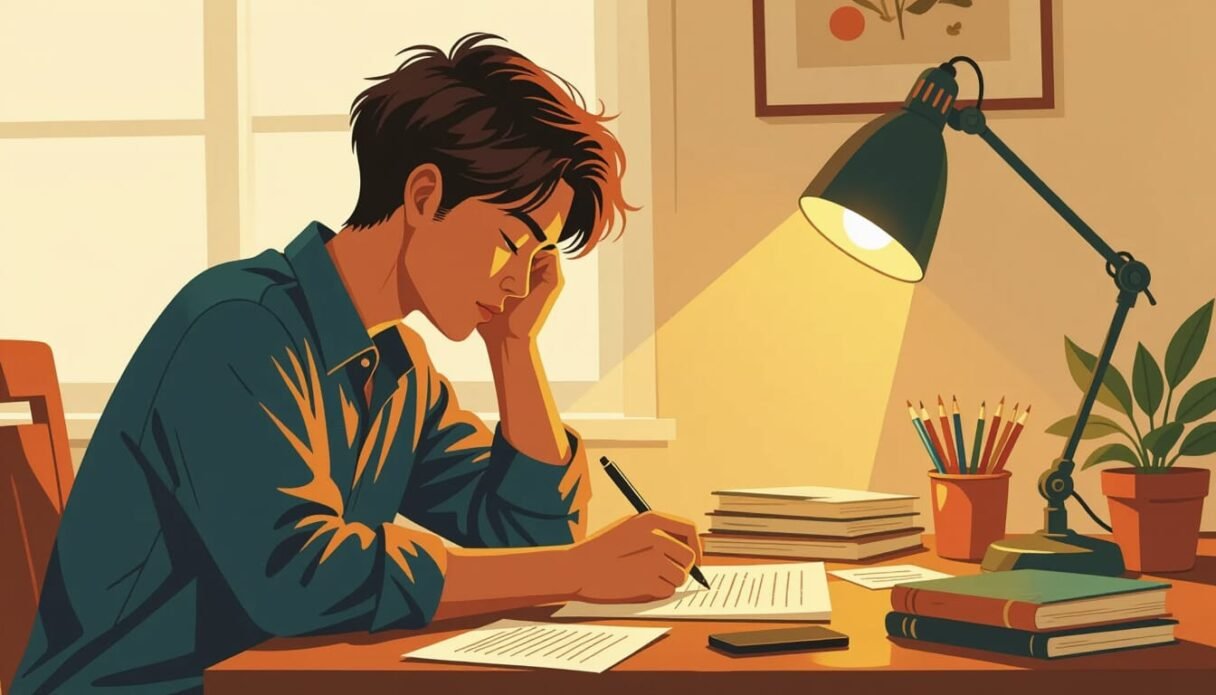
Every writer I’ve ever met has a secret confession: we’re all slightly terrified we’ve forgotten how to write.
It doesn’t matter how many articles you’ve published or how poetic your sentences once were, sit in front of a blank page on a Tuesday morning and your mind suddenly goes on holiday. “Writing skills?” you mumble. “What writing skills?”
It’s a funny sort of madness, this craft of ours. Everyone thinks writers are blessed with some divine spark, when in truth, most of us just keep showing up with coffee, stubbornness, and a faint sense of panic.
But here’s the truth that will save you years of self-torture:
Writing isn’t magic. It’s a muscle.
And like any muscle, it gets stronger through rhythm, repetition, and the occasional ego bruise.
Let’s talk about how to actually improve that muscle, without turning into a soulless grammar robot or a burnt-out perfectionist.
1. Read Like a Thief
Every writer begins as a magpie.
We steal from voices we love, not the words, but the rhythm, the timing, the heartbeat behind the sentences. Reading widely gives your subconscious a masterclass in flow and structure.
When you read a piece that makes your chest tighten, stop. Don’t just admire it. Study it. Ask:
- Why does this feel so good to read?
- What tricks is the writer using, short sentences, pauses, rhythm?
- How do they transition from thought to thought without you noticing?
Then go back to your own writing and try a similar trick.
You’re not copying. You’re evolving through exposure.
Writers who don’t read are like chefs who refuse to taste food — creatively malnourished and forever stuck in their own seasoning.
2. Write Ugly, Edit Beautiful
Perfectionism kills more writing than laziness ever did.
If you want to improve, make a pact with yourself: write badly on purpose. Let it spill out like messy handwriting after a long night.
Because here’s the secret: you can’t edit what doesn’t exist.
The first draft is supposed to be chaotic, overlong, self-indulgent, even ridiculous. That’s its job. Editing is where you sculpt the shape, sand the edges, and reveal the soul underneath.
So, write ugly.
Then edit like a jeweller polishing gold, not rushing, but with care and intention.
3. Find Your Voice (and Stop Apologising for It)
At some point, you have to stop writing like your old English teacher is peering over your shoulder.
Voice is the fingerprint of your writing. It’s the combination of rhythm, honesty, and perspective that no one else can replicate, even if they try.
The best writers aren’t the most perfect ones; they’re the ones you recognise instantly.
To find your voice, write the way you think. Speak on the page. Let your quirks and contradictions show. Readers don’t fall in love with flawless, they fall in love with real.
And for the love of ink, stop apologising for how you sound.
4. Get Feedback — Not Validation
Every writer craves validation. That little dopamine hit when someone says, “This is brilliant!”
But if you’re serious about getting better, you need something harder to hear. Constructive feedback, the kind that pokes holes in your logic, catches lazy sentences, and pushes you out of your comfort zone.
It’s uncomfortable. It’s humbling. And it’s the fastest way to grow.
The trick is to choose your readers wisely. Don’t hand your work to the friend who’ll just say, “It’s nice.” Find the one who’ll say, “You lost me halfway through paragraph three.” That’s gold.
Validation feels good.
Feedback makes you good.
5. Read Your Work Aloud
You can spend hours rewriting a paragraph and still miss what’s wrong with it, until you hear it spoken.
Reading aloud exposes rhythm problems, clunky sentences, and awkward phrasing in seconds. It’s like holding your writing up to a mirror.
If you stumble, if you run out of breath, if it sounds robotic, that’s your cue to fix it.
Bonus tip: record yourself reading and listen back. You’ll catch things your eyes never would. (Warning: you may also question all your life choices. This is normal.)
6. The Long Game
Improving your writing isn’t about hacks, templates, or chasing viral posts. It’s about turning up often enough that writing becomes a second language.
There’s no single “moment” when you become a good writer. You just wake up one day, reread something old, and realise: I’ve come a long way.
The mistakes, the rewrites, the cringe, they’re all part of the apprenticeship.
So write.
Write when you’re inspired.
Write when you’re bored.
Write when you’d rather reorganise your sock drawer.
Because the only real secret to improving your writing skills… is to keep writing.
And somewhere between the chaos and the coffee, your voice will find its stride.
Until Next Time

Discover more from Dominus Owen Markham
Subscribe to get the latest posts sent to your email.