
At some point, without really noticing when, we handed the steering wheel to the algorithm.
We didn’t mean to. It happened gradually… a tweak here, a “best practice” there, a well-meaning thread explaining how this combination of words, symbols and timing might finally unlock reach, relevance, visibility. The digital promised land.
So we adapted. We softened. We optimised.
And somewhere in the process, a lot of people quietly misplaced their voice.
Now, don’t get me wrong. I’m not anti-tools. I’m not pretending hashtags are evil little gremlins that crawl out at night to steal your soul. They’re useful. Sometimes. In the same way a map is useful… until you start walking in circles because the map told you to, even though you can see the mountain with your own eyes.
The problem isn’t hashtags.
The problem is what we’ve started writing for.
Because a strange thing happens when creation becomes performative rather than expressive. You stop asking “Is this true?” and start asking “Will this travel?” You stop listening inwardly and start second-guessing outwardly. Tone gets diluted. Edges get rounded. Opinions get dressed up to be more palatable.
You don’t lose your voice all at once.
You sand it down… politely.
Scroll through most platforms on any given day and you’ll see it. Thousands of people shouting into the void in the same accent. Same hooks. Same cadence. Same confidence cosplay. Different usernames, identical energy.
It’s not that the content is bad. It’s that it’s interchangeable.
And interchangeability is death for writers.
Here’s the uncomfortable truth most people don’t want to hear… if your words only work when the hashtags are perfect, the words aren’t doing enough work on their own.
The pieces that stick, the ones that get bookmarked, screenshot, emailed to a friend at 1am with “this made me think of you”… they don’t move because they were optimised. They move because they recognised something human.
They carry friction. Texture. A pulse.
They sound like someone, not something.
A voice doesn’t come from strategy. It comes from stance.
From deciding, consciously or not, that you are prepared to be misread. That you are willing to be smaller to the wrong audience in order to be unmistakable to the right one. That you’ll trade reach for resonance… at least at first.
Because yes, here’s the bit no growth hacker likes to admit… voice is inefficient.
It doesn’t scale neatly. It doesn’t behave. It doesn’t always play well with trends. Sometimes it costs you followers. Sometimes it earns you silence. Sometimes it makes people uncomfortable.
Good.
Comfort is rarely memorable.
There’s a strange cultural myth floating around that visibility comes first and substance follows later. Build the audience, then get real. Learn the system, then bend it. Play the game, then say what you actually think.
In practice, it rarely works like that.
What usually happens is people get trapped performing a version of themselves that worked once. A tone that got likes. A format that pleased the machine. And slowly, imperceptibly, the gap widens between what they publish and what they want to say.
That gap is exhausting.
You can feel it when you read something written by someone who doesn’t quite believe what they’re saying anymore. It’s technically fine. Polished. Correct. And utterly forgettable.
Contrast that with writing that feels slightly dangerous… not because it’s outrageous, but because it’s honest. Because the author clearly wasn’t thinking about reach when they hit publish. They were thinking about truth. Or curiosity. Or irritation. Or wonder.
That kind of writing has weight.
It creates gravity.
Gravity doesn’t need hashtags. Gravity pulls regardless.
People orbit what feels real. They linger where something sounds like it couldn’t have been written by anyone else. They return not because they were targeted, but because they were recognised.
And yes, this takes longer. It’s slower. It’s messier. You won’t get neat little spikes of validation on demand.
But what you build is sturdier.
Ten people who truly feel your work will do more for you than ten thousand passive scrollers who vaguely agree with a sentence and forget it ten seconds later. The former talk. They share. They remember. They come back.
The latter… don’t.
There’s also a quieter benefit to ditching hashtag-first thinking. You start enjoying writing again.
You stop contorting sentences to fit invisible rules. You stop shaving off the strange bits. You let humour creep in where it wants to. You let anger sit where it belongs. You trust your own rhythm instead of mimicking someone else’s.
Writing stops feeling like a performance review and starts feeling like a conversation.
And here’s the irony… once your voice is clear enough, the system tends to catch up anyway. Algorithms are crude pattern recognisers. They eventually notice when humans linger, return, engage meaningfully. Authenticity isn’t some mystical force… it’s just harder to fake at scale.
So yes, use hashtags if you want. Sprinkle them on. Treat them like seasoning, not the meal.
But don’t let them dictate your tone. Don’t let them neuter your language. Don’t let them talk you out of saying the thing you actually came here to say.
Write like you’re speaking to one intelligent person who might genuinely need to hear it. Write like you don’t get a second shot. Write like being understood matters more than being seen.
Because trends expire. Formats decay. Platforms rise and rot.
Voice endures.
And if you’re going to leave anything behind in this endless churn of content, let it be something unmistakably yours.
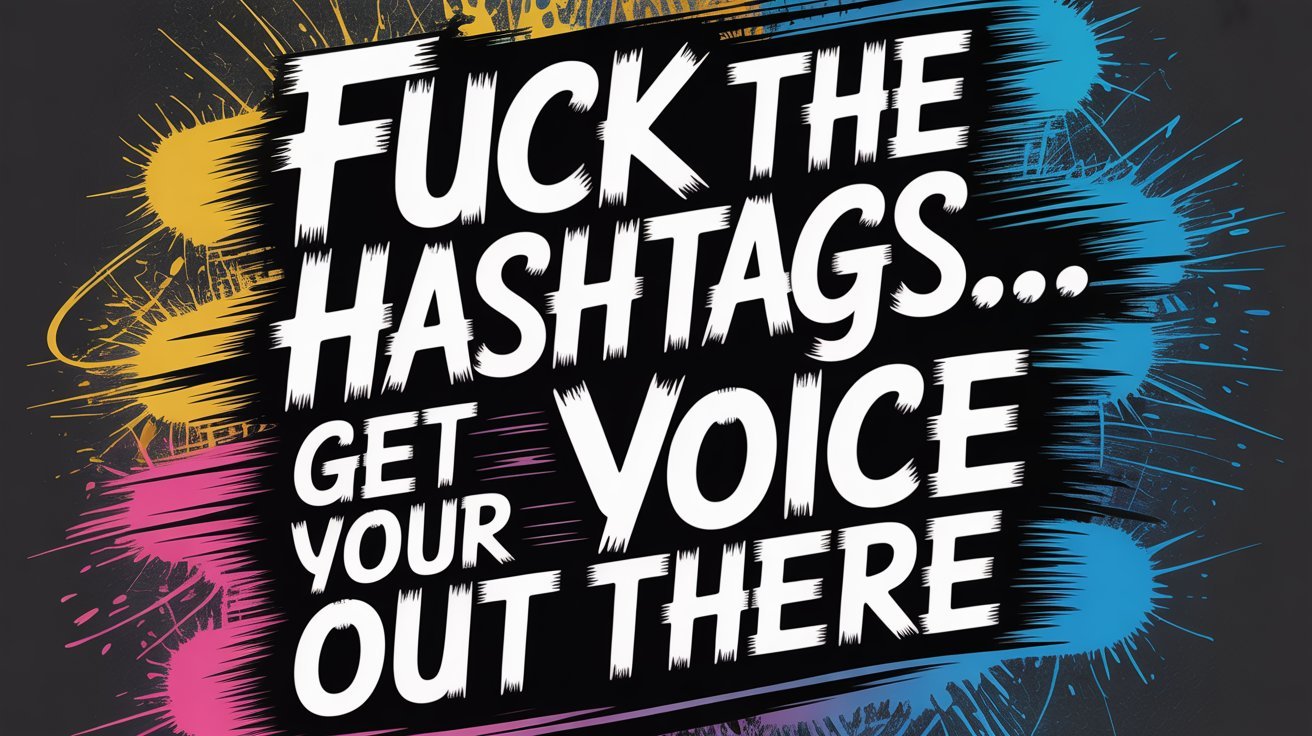
Fuck the hashtags.
Get your voice out there.
Someone’s listening… even if the algorithm hasn’t noticed yet.
Until Next Time

Discover more from Dominus Owen Markham
Subscribe to get the latest posts sent to your email.