
But What It Actually Did Might Be More Interesting.
Right, let’s clear something up before the internet gets any more confused.
California has not, despite what some headlines might suggest, “joined the WHO” in the way a country would. It hasn’t declared independence, applied for a seat at the big table, or started issuing its own passports with little palm trees on them. That’s not how any of this works.
What has happened is arguably more interesting… and definitely more awkward for the current administration in Washington.
What Actually Went Down
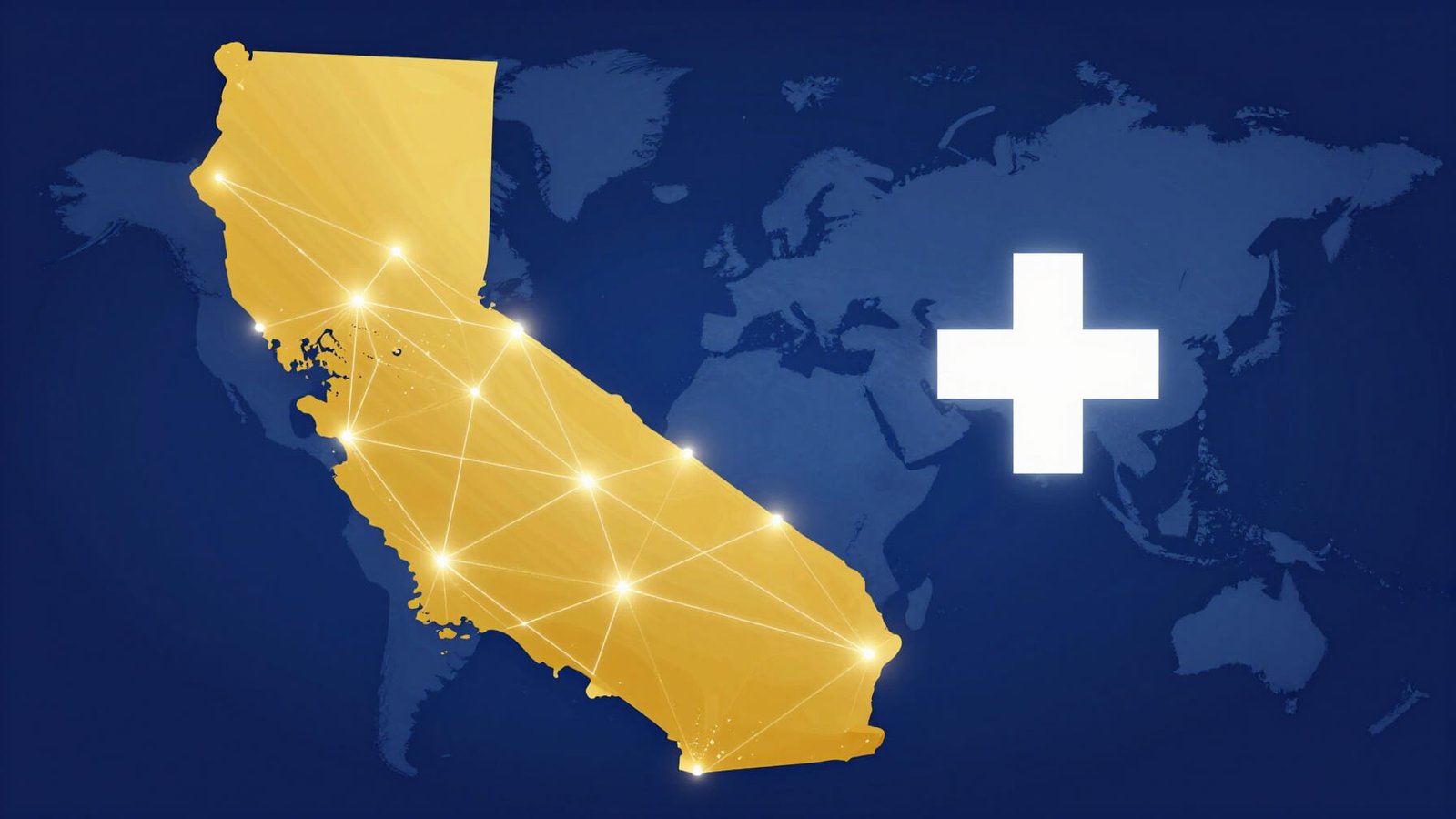
In late January 2026, Governor Gavin Newsom announced that California had become the first U.S. state to join something called the Global Outbreak Alert and Response Network. GOARN, if you’re into acronyms that sound vaguely like a fantasy character’s battle cry.
GOARN is a WHO-coordinated network, a sort of international public health coalition linking hundreds of institutions and organisations across the world. Think of it as a global early-warning system for disease outbreaks, where everyone shares data, expertise, and resources when something nasty starts spreading.
This is network membership, not full WHO membership. Only sovereign states can actually join the WHO itself, and the United States, as you may have heard, has recently withdrawn under President Trump. Again.
So California hasn’t become a country. It’s just done something rather pointed while the federal government was busy burning bridges.
The Political Bit (Because Of Course There’s Politics)
Newsom didn’t exactly bury the lede on this one. He framed the move explicitly as a response to Trump pulling the U.S. out of the WHO, calling the withdrawal “reckless” and positioning California as a kind of public health counterweight to federal policy.
It’s classic Newsom, really. Bold, a bit theatrical, definitely aimed at making a statement. California as the responsible adult in the room, the one still taking international cooperation seriously while the federal government… well, does whatever it is the federal government is doing these days.
Whether you think that’s heroic leadership or performative politics probably depends on where you stand on most things. But the practical implications are real either way.
So What Does GOARN Membership Actually Mean?
Here’s where it gets interesting.
Through GOARN, California’s public health agencies can now collaborate directly with the WHO and other international partners on rapid detection, verification, and response to disease outbreaks. Especially the kind that don’t respect borders or care about your political affiliation.
In practice, that means:
California can share surveillance data with the network. If something weird starts showing up in hospital admissions or lab results, that information can flow to international partners who might be seeing similar patterns elsewhere.
The state gets access to international expertise and technical missions. When a new pathogen emerges, California can tap into a global knowledge base rather than figuring everything out in isolation.
It can participate in coordinated responses during major health emergencies. Think pandemic-level events where having aligned strategies and shared resources actually matters.
It’s not flashy. It’s not going to make for great campaign ads. But if you’re trying to stop the next pandemic before it becomes the next pandemic, this is the kind of infrastructure that actually helps.
Why This Matters (And Why It Doesn’t)
On one level, this is huge. California is now the only U.S. state formally connected to this WHO-coordinated outbreak network. It has a direct channel for international cooperation while the federal government stands outside the room with its arms crossed.
That could genuinely strengthen California’s early-warning capacity for new pathogens. It could help coordinate responses with other countries and institutions. It reinforces the state’s image as a global public health actor, which is either inspiring or insufferable depending on your perspective.
But let’s not get carried away.
California still operates within the United States. It still has to deal with federal agencies, federal funding, federal regulations. It can’t just opt out of national policy whenever it fancies. This isn’t independence, it’s… creative networking.
And GOARN membership, while valuable, isn’t the same as being at the table when the WHO makes major policy decisions. California gets access to the network’s resources and expertise, but it doesn’t get a vote on global health governance.
Still, in an era where the federal government seems to be actively retreating from international cooperation, having any state maintain those connections feels significant. Even if it’s partly symbolic, symbols sometimes matter.
The Uncomfortable Questions
Here’s what I keep thinking about, though.
If California can do this, why can’t other states? What happens if Texas or Florida decide to do something similar, but with completely different public health philosophies? Does this create a patchwork of international health commitments that makes coordinating a national response even messier?
And what happens when the next pandemic actually hits? Will California’s GOARN membership give it a meaningful advantage in protecting its residents? Or will it just create more bureaucratic complexity while the virus does what viruses do?
I don’t have good answers to those questions. I’m not sure anyone does yet.
What I do know is that public health, like most things worth caring about, works better when people talk to each other. When they share data, expertise, resources. When they coordinate rather than compete.
California joining GOARN doesn’t solve the fundamental problem of a fragmented, politicised approach to public health in the United States. But it does keep at least one line of communication open to the rest of the world.
And honestly? Given where we are right now, I’ll take what we can get.
What do you reckon? Is this smart leadership or pointless posturing? Either way, it’s definitely not boring.
Until Next Time


Discover more from Dominus Owen Markham
Subscribe to get the latest posts sent to your email.