
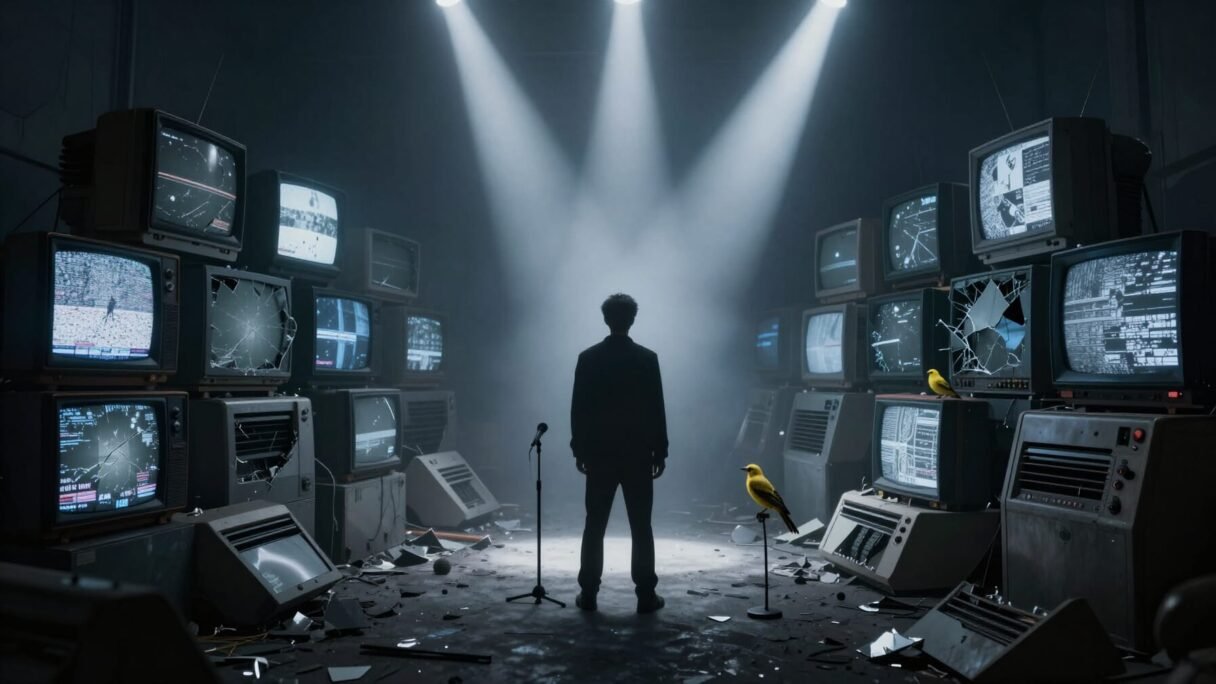
On Journalism, Free Speech, and the Quiet Slide Into Something Darker
Have you noticed that point in every authoritarian playbook where the press stops being a nuisance and becomes an enemy? You can almost hear the gears shifting. What was once tolerated… grudgingly, perhaps, with eye-rolls and the occasional lawsuit… suddenly becomes intolerable. Journalists aren’t just biased or annoying anymore. They’re dangerous. They’re traitors. They’re fake news peddlers who need to be dealt with.
We’re watching that shift happen in real time, across multiple countries, and if you’re not at least a bit unsettled by it, you haven’t been paying attention.
The Fourth Estate is on Fire
The Fourth Estate… that slightly pompous term for the press as democracy’s watchdog… is supposed to bark when power oversteps. It’s supposed to investigate, expose, question, and generally make life difficult for anyone trying to pull a fast one on the public. It’s not always pretty. Sometimes it’s downright messy. But it’s essential.
And right now, it’s under siege.
Independent journalists are being arrested. Not in some far-flung dictatorship (though that too), but in places we smugly assumed had sorted out this whole “freedom of speech” thing centuries ago. Newsrooms are being gutted by corporate buyouts that care more about shareholder value than holding politicians accountable. Whistleblowers are prosecuted with more vigour than the crimes they expose. And every time someone with a platform asks an uncomfortable question, there’s a chorus ready to accuse them of bias, of having an agenda, of being part of some shadowy conspiracy.
It’s exhausting. And it’s working.
The Arrests You Didn’t Hear About
Let’s talk specifics, because generalities let us off the hook too easily.
Journalists in the UK have faced arrests under vague “public order” laws for the crime of… reporting. In the US, press credentials are revoked, reporters are threatened with espionage charges, and the phrase “enemy of the people” has been normalised to a degree that should terrify anyone with a functioning memory of 20th-century history.
Elsewhere… Turkey, Russia, China, India, Myanmar… the list is long and grim… journalists disappear, face trumped-up charges, or find themselves in prison cells for years. And yes, those places have always been hostile to press freedom. But what’s changed is the West’s willingness to look the other way, or worse, to adopt similar tactics with a veneer of legality.
When the Committee to Protect Journalists has to issue warnings about press freedom in liberal democracies, something has gone badly wrong.
Corporate Capture and the Slow Death by a Thousand Cuts
It’s not just governments, though. Arguably, the quieter threat… the one that doesn’t make headlines because it’s too boring, too systemic… is corporate capture.
Newsrooms have been strip-mined. Local papers, the ones that actually held council meetings to account and knew the name of every dodgy landlord in town, have been bought up by hedge funds and hollowed out. What’s left is a husk: wire service rewrites, clickbait, and the occasional “heartwarming” story about a dog saved from a drain.
National outlets aren’t much better. Owned by billionaires with business interests that mysteriously never get scrutinised. Funded by advertisers who’ll pull their money the moment a story gets too spiky. Edited by people who’ve learned that rocking the boat is bad for their career.
The result? A press that’s less watchdog, more lap dog.
And we, the public, have learned to distrust journalism so thoroughly that we don’t even notice when it’s gone. We fill the gap with podcasts, Substack newsletters, Twitter threads… some brilliant, some utterly unhinged, none with the resources or legal protections that actual newsrooms used to provide.
Free Speech as a Weapon
Here’s where it gets tricky.
Because the people dismantling press freedom are very good at using the language of free speech to do it. They’ll scream about censorship when a platform bans hate speech, but stay silent when a journalist is jailed. They’ll defend their right to lie, to incite, to spread conspiracy theories… all under the banner of “free expression”… whilst simultaneously suing anyone who dares investigate them into oblivion.
It’s a shell game. And it’s deliberately confusing.
Free speech isn’t just the right to say whatever you want without consequences. It’s also the infrastructure that allows dissent, investigation, and accountability to function. When that infrastructure is attacked… when journalists are harassed, when whistleblowers are prosecuted, when newsrooms are starved of funding… free speech doesn’t expand. It contracts. It becomes the preserve of the powerful, the loud, and the well-funded.
The rest of us get to shout into the void.
The Authoritarian Creep
What’s most chilling is how gradual this all is.
There’s rarely a single, dramatic moment where democracy dies and authoritarianism takes over. It’s a slow erosion. A law here, a precedent there. A journalist arrested under “anti-terror” legislation. A whistleblower sentenced to decades in prison. A news outlet that suddenly goes quiet on certain topics because the editor got a phone call.
Each incident, taken alone, can be rationalised. Security concerns. National interest. Legal process. But step back, and the pattern is obvious.
And the thing about authoritarian creep is that by the time you notice it, you’re already complicit. You’ve already normalised the arrests, the surveillance, the self-censorship. You’ve already learned not to ask certain questions, not to look too closely, not to rock the boat.
It’s comfortable, in a depressing sort of way. Safer. Easier.
Until it isn’t.
What Actually Protects Democracy
So what do we do?
Because hand-wringing essays like this one are all well and good, but they don’t stop the slide.
First, we need stronger legal protections for journalists and whistleblowers. Not vague, easily-ignored guidelines, but actual laws with teeth. Shield laws that protect sources. Anti-SLAPP legislation that prevents the wealthy from suing critics into silence. Prosecutorial restraint when it comes to charging journalists under “national security” laws that were never meant to apply to them.
Second, we need to fund independent journalism. And I mean fund it. Not just with subscriptions and Patreon pledges (though those help), but with public money, structured in a way that keeps it independent from government interference. The BBC model, for all its flaws, is one version. There are others. The point is: journalism costs money, and if we’re not willing to pay for it, someone else will… and they’ll expect something in return.
Third, we need to rebuild trust. Which is hard, because journalism has earned some of its reputation for bias, for sloppiness, for cosying up to power. But trust isn’t rebuilt by pretending those problems don’t exist. It’s rebuilt by doing better. By being transparent about methods, sources, and mistakes. By holding ourselves to the same standards we demand of others.
And fourth… and this is the hardest one… we need to care. We need to pay attention. We need to read past the headline, to question our own biases, to support journalists doing difficult, dangerous work even when their conclusions make us uncomfortable.
Because the alternative is a world where power operates in the dark, unchallenged and unaccountable. And history is littered with examples of what happens next.
The Canary is Singing
There’s an old mining metaphor about canaries in coal mines. When the canary stops singing, you know the air’s gone bad.
Right now, the canaries are still singing. Just. Independent voices are still out there, still reporting, still asking awkward questions. But they’re increasingly isolated, under-resourced, and under attack.
And we’re running out of time to notice.
Because once the watchdogs are muzzled, once the press is reduced to a propaganda arm or a toothless entertainment outlet, the slide into authoritarianism accelerates. Elections become theatre. Corruption becomes background noise. Dissent becomes dangerous.
And by the time we realise what we’ve lost, it’s too late to get it back.
So maybe… just maybe… we should start paying attention now. Before the canary stops singing altogether.
This isn’t about left or right. It’s not about partisan politics or media bias. It’s about whether we want to live in a society where power can be questioned, where injustice can be exposed, where the truth… messy, complicated, inconvenient as it often is… still matters.
I think we do. But we’re going to have to fight for it.
Until Next Time

Discover more from Dominus Owen Markham
Subscribe to get the latest posts sent to your email.