
What the Hell Are We Doing to Our Olympians?
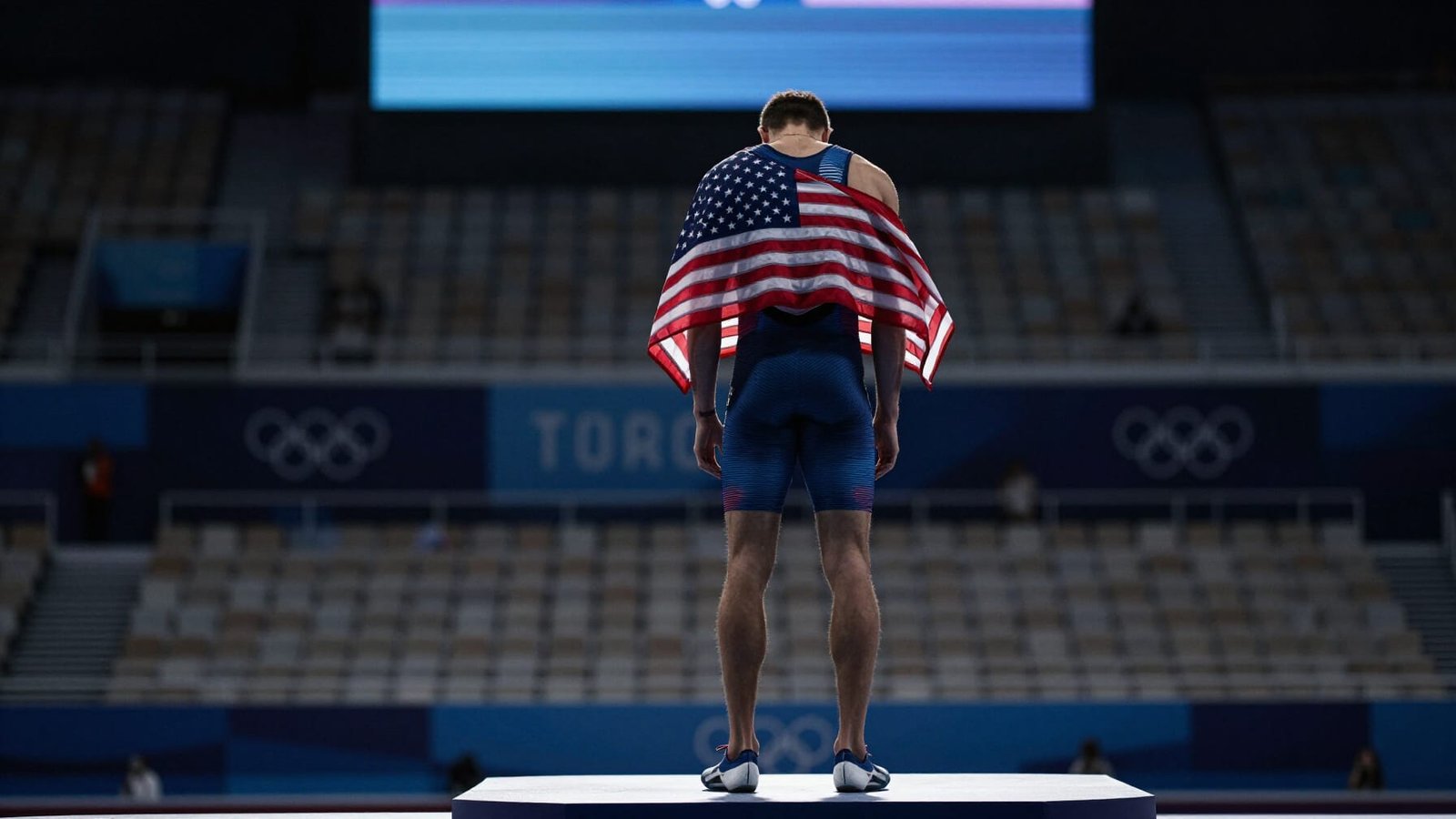
There’s a moment in the opening ceremony of the Milan-Cortina Winter Games that keeps rattling around my head. The American team walks in, flag raised, and when Trump appears on the big screens, the stadium fills with boos. The coaches panic for a second, thinking it’s aimed at the athletes. It’s not, of course… it’s aimed at the president. But here’s the thing: the athletes can’t escape it either way. They’re carrying the weight of that passport whether they like it or not.
And some of them are starting to say so.
Freestyle skier Hunter Hess stood in front of cameras and said he doesn’t “represent everything that’s going on in the U.S.” just because he wears the flag. He’s there for the people who supported him, not to endorse the government. Chris Lillis, another freestyle skier, spoke about feeling “heartbroken” over immigration enforcement back home. They want the America they show on the Olympic stage to be one that respects everyone’s rights, treats citizens with love and respect.
Pretty reasonable stuff, right?
Except Donald Trump called Hess “a real Loser” on Truth Social and suggested he shouldn’t be on the team at all if he doesn’t feel he represents his country. Jake Paul told athletes who criticise the U.S. to “go live somewhere else,” a message amplified to millions. Conservative commentators are now calling for outspoken athletes to be barred from competing, framing any criticism as unpatriotic or disloyal.
So let me ask the question: when did patriotism become a loyalty test you can fail by having a conscience?
The Impossible Position
Here’s what’s happening. Athletes train their entire lives for this. They sacrifice relationships, financial stability, their bodies… all to compete at the highest level. And when they get there, they’re expected to be silent flag-bearers, smiling symbols of national greatness, no questions asked.
But they’re not symbols. They’re people. And people have opinions, especially when they’re being asked to represent a country whose policies they find morally troubling.
The Olympic ideal is supposed to include free expression. That’s the whole point, isn’t it? That sport transcends politics, that it’s a place where humanity can show its best self. But the backlash these athletes are facing suggests something darker: that we don’t actually want them to be fully human. We want them to perform patriotism, to shut up and ski, to be decorative rather than difficult.
And if they don’t? Well, they’re losers. Traitors. They should leave.
What We’re Really Arguing About
This isn’t really about Hunter Hess or Chris Lillis. It’s about what America is allowed to be right now, and who gets to decide.
There’s a version of patriotism that’s all muscle and no questions. It demands unquestioning loyalty, treats critique as betrayal, and measures love of country by how much you’re willing to ignore what’s wrong with it. It’s a brittle, insecure kind of love… one that can’t survive honesty.
And then there’s the version these athletes seem to be embodying: we love this country enough to want it to be better. We’re proud of what we can achieve, but we’re not going to lie about what’s happening back home. We’ll ski for you, but we won’t pretend for you.
That second version? It’s actually harder. It requires holding two things at once: pride and disappointment, love and critique. It’s the kind of patriotism that doesn’t fit neatly into a tweet or a flag emoji, which is probably why it makes people so uncomfortable.
The Squeeze
The athletes are caught in a squeeze. On one side, there’s domestic pressure to be quiet, to smile, to wave the flag and not complicate the narrative. On the other, there’s the international stage, where foreign audiences are booing American leadership and questioning whether the U.S. still holds any moral authority.
Stephen Curry tried to thread this needle during the Paris 2024 Olympics, talking about how sport can “bring people together” and show “the best of us” at a moment when the country feels divided. It’s a nice idea. But it also asks athletes to do the emotional labour of holding the country together while the rest of us tear it apart.
And some of them are saying: no thanks. I’m here to compete, not to be your national therapist.
What Are We So Afraid Of?
Here’s what I keep coming back to: why are we so terrified of athletes having opinions?
Is it because we’ve turned them into symbols instead of people, and symbols aren’t allowed to talk back? Is it because critique feels like betrayal when you’ve built your identity around the idea that your country is always right? Or is it because hearing someone say “I love this place, but I don’t love what it’s doing” forces us to reckon with our own discomfort?
The backlash isn’t just rhetorical. There are actual calls to bar these athletes from competing. To punish them for speaking. To make an example out of them so the next generation knows to keep quiet.
And that… that should scare us more than anything an athlete could say at a press conference.
The Wider Cracks
This isn’t happening in a vacuum. International sports bodies are already questioning American moral authority. In 2024, the Association of Summer Olympic International Federations criticised Washington for undermining WADA’s independence. WADA later accused the U.S. anti-doping agency of letting doped American athletes compete as undercover agents. The trust is already fractured.
American power looks shakier than it used to. That’s not the athletes’ fault. They’re just the ones being asked to smile through it.
So What Now?
I don’t have a tidy answer here. I’m not sure there is one.
But I do think we need to ask ourselves what kind of country we want to be. Do we want a place where loyalty is measured by silence? Where athletes are only valuable if they perform gratitude and never ask hard questions? Where critique is treated as treason?
Or do we want a place where people can love their country and hold it accountable? Where representing the flag means representing all the messy, complicated, beautiful, broken parts of what America actually is?
Because right now, we’re telling our best and brightest that if they dare to be honest, they’re losers who should leave. And I don’t know about you, but that doesn’t sound like strength to me.
That sounds like fear.
What do you think? Are athletes right to speak out, or should they keep politics off the podium? I’d genuinely love to hear where you land on this.
Until Next Time


Discover more from Dominus Owen Markham
Subscribe to get the latest posts sent to your email.