
Right, so let me get this straight.
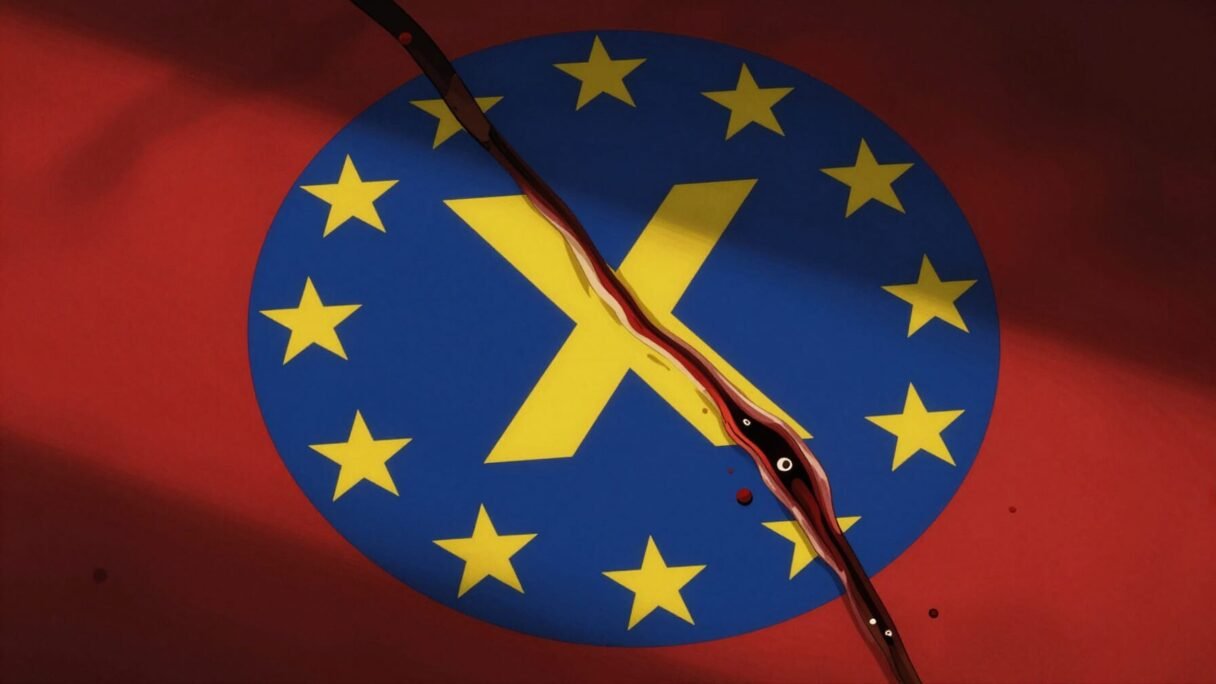
The European Union, in all its bureaucratic wisdom, decided to fine Elon Musk’s X platform €120 million for… checks notes… misleading blue checkmark practices, lack of ad transparency, and restricting researcher data access. The stated aim? To regulate a platform they believe spreads misinformation and undermines democratic discourse.
The result? X became the number one free news app in all 27 EU countries. Overnight. Surpassing the BBC, CNN, and every other legacy outlet that’s spent decades building trust, credibility, and… well, paywalls.
Congratulations, Brussels. You’ve just done more for Elon Musk’s brand than his entire marketing budget ever could. This is the regulatory equivalent of trying to put out a fire by dousing it in petrol whilst live-streaming the whole thing on TikTok.
The Streisand Effect Goes Continental
There’s a delicious irony here that I’m not sure the EU fully grasped before hitting “send” on that fine. When you publicly punish a platform for allegedly restricting speech, you don’t make it look dangerous. You make it look interesting.
Suddenly, millions of Europeans who’d never given X a second thought are downloading it en masse, presumably thinking: “If the EU’s this bothered about it, what am I missing?”
It’s the Streisand Effect writ large across an entire continent. Barbara Streisand tried to suppress photos of her Malibu mansion and ended up making them the most viewed images on the internet. The EU tried to regulate X into submission and turned it into the hottest media property in Europe.
Somewhere, in a minimalist office with floor-to-ceiling windows overlooking Texas, Elon Musk is cackling into his ceremonial goblet of liberal tears.
But Here’s Where It Gets Properly Mental
Because whilst pro-Musk voices are celebrating this as a victory for free speech against bureaucratic censorship, there’s a rather large elephant in the server room that nobody seems keen to discuss: X’s new Terms of Service.
You know, the ones taking effect on January 15th, 2026.
The ones that give X perpetual, royalty-free rights to do whatever they want with your content. Forever. No compensation. No opt-out. Just… have it, lads. Help yourself.
The ones that allow X to delete your account “for any reason or no reason,” potentially nuking years of your writing, your network, your digital existence into the void with zero due process.
The ones that slap you with a $15,000 penalty if you access over a million posts in 24 hours, conveniently making it prohibitively expensive for journalists and researchers to, you know, actually scrutinise the platform.
The ones that ban “prompt engineering” or “security testing,” effectively making it against the rules to expose censorship or hold the platform accountable.
So let me just… let me just make sure I’ve got this right. We’re celebrating a victory for free speech on a platform that can arbitrarily delete your speech, monetise your speech without paying you, and legally punish you for investigating whether speech is being suppressed.
That’s… that’s the free speech we’re defending here?
Cool. Cool cool cool. Just checking.
The “Free Speech” That Comes With Asterisks
Look, I’m no fan of the EU’s heavy-handed approach to regulation. I’ve written before about how their one-size-fits-all directives often feel like they were drafted by people who think “the internet” is a physical place you can visit on a day trip.
And yes, there’s something deeply troubling about Europeans facing arrest for “offensive” posts or memes. The UK’s 12,000 annual arrests for social media activity under Keir Starmer’s government is genuinely dystopian. The Free Speech Union’s membership swelling to 40,000 tells you everything you need to know about how terrified people are of accidentally committing thoughtcrime.
But here’s the thing: just because the EU’s approach is authoritarian nonsense doesn’t mean X’s approach is the noble alternative.
This isn’t a binary choice between European censorship and American freedom. It’s a choice between government-enforced speech restrictions and corporate-controlled speech platforms that can change the rules whenever they fancy, harvest your content for AI training, and boot you off the premises if you sneeze in the wrong direction.
Neither of these is “free speech” in any meaningful sense. They’re both just different flavours of control, dressed up in the rhetoric of principle.
The Oligarch Question Nobody Wants to Answer
Here’s where it gets uncomfortable for the “Elon saved free speech” crowd: who exactly are we trusting with this power?
Because it’s not “the people.” It’s not some decentralised, democratically governed commons where speech flourishes according to collectively agreed-upon norms. It’s one bloke. A very rich, very temperamental bloke who bought a platform and now gets to decide what happens on it.
When the EU regulates speech, we can (in theory) vote them out. When X regulates speech, we can… what? Tweet angrily about it? Until we can’t?
The framing of this as “free speech advocates vs. bureaucratic censors” is dangerously incomplete. It’s more accurately “one form of centralised power vs. another form of centralised power, both claiming to act in our best interests.”
And frankly, I’m not sure I trust either of them.
The AI Clause That Should Terrify Everyone
Can we talk about the AI training bit for a second? Because this is where things go from “problematic” to “absolutely taking the piss.”
Every post you’ve ever made on X, every thought you’ve shared, every half-formed 3am ramble about whether pigeons are real… all of it can now be used to train AI models. Without your consent. Without compensation. Without even a courtesy notification.
You’re not just a user anymore. You’re an unpaid data source. A content farm. A battery in the Matrix, except instead of generating energy, you’re generating training data for tools that will eventually replace you in the digital ecosystem you helped build.
And the kicker? These AI tools could be used for surveillance, manipulation, or god knows what else. They could enable exactly the kind of authoritarian control that free speech advocates claim to oppose.
But sure, let’s celebrate the €120 million fine as a win for liberty.
What “Free Speech” Actually Means (And Why This Isn’t It)
Free speech, in the philosophical sense that actually matters, requires more than just the absence of government censorship. It requires:
- Security: You can’t speak freely if you’re afraid your platform will vanish tomorrow
- Ownership: You can’t speak freely if someone else can monetise your words without your consent
- Transparency: You can’t speak freely if the rules change arbitrarily and you don’t know why you were silenced
- Recourse: You can’t speak freely if there’s no appeal process when you’re wrongly punished
X’s new TOS violates every single one of these principles. It’s not a free speech platform. It’s a corporate-controlled megaphone that happens to be louder than the alternatives.
The EU’s approach is authoritarian. X’s approach is oligarchic. Neither is freedom.
So What Now?
The depressing reality is that we’re trapped between two increasingly unappealing options. Either we accept government regulation that stifles genuine discourse in the name of “safety,” or we accept corporate platforms that exploit our content, surveil our behaviour, and can unperson us on a whim in the name of “innovation.”
The third option, building genuinely decentralised, user-governed platforms, remains largely theoretical. Mastodon exists but hasn’t achieved critical mass. Bluesky is trying but faces the same network effect challenges. The Fediverse is lovely in principle but remains niche.
Meanwhile, millions of Europeans are downloading X because the EU made it look cool by punishing it. And millions of Americans are defending X’s authoritarian TOS because it’s not the government’s authoritarian TOS.
We’ve somehow ended up in a world where “free speech” means “the right to be exploited by whichever power structure you find least objectionable.”
The Uncomfortable Truth
The €120 million fine backfiring so spectacularly says less about X’s virtues than it does about our collective exhaustion with being told what we can and can’t say by people who clearly don’t understand how communication works.
But that exhaustion doesn’t make X the hero of this story. It makes it the beneficiary of our desperation for an alternative, any alternative, to the suffocating paternalism of traditional institutions.
Elon Musk didn’t “save” free speech. He just happens to be the loudest person in the room at the exact moment when everyone else is losing their minds.
And if we’re not careful, we’ll trade one form of censorship for another, all whilst congratulating ourselves on how principled we’re being.
The EU’s fine was a gift. Not to free speech. Not to democracy. But to the very oligarchic control that critics like Robert Reich have been warning about.
Sometimes the greatest threat to freedom isn’t the obvious villain. It’s the alternative that looks just appealing enough to make us forget to ask the important questions.
Like: who actually benefits when the platform you’re defending can do literally anything it wants with your words?
Because it’s not you.
And it never was.


Discover more from Dominus Owen Markham
Subscribe to get the latest posts sent to your email.